

Commentary
Artyom Shraibman
{
  "authors": [
    "Artyom Shraibman"
  ],
  "type": "commentary",
  "blog": "Carnegie Politika",
  "centerAffiliationAll": "",
  "centers": [
    "Carnegie Endowment for International Peace",
    "Carnegie Russia Eurasia Center"
  ],
  "englishNewsletterAll": "",
  "nonEnglishNewsletterAll": "",
  "primaryCenter": "Carnegie Russia Eurasia Center",
  "programAffiliation": "",
  "regions": [
    "Belarus"
  ],
  "topics": [
    "Technology",
    "Global Governance",
    "Civil Society",
    "Domestic Politics"
  ]
}
Source: Getty
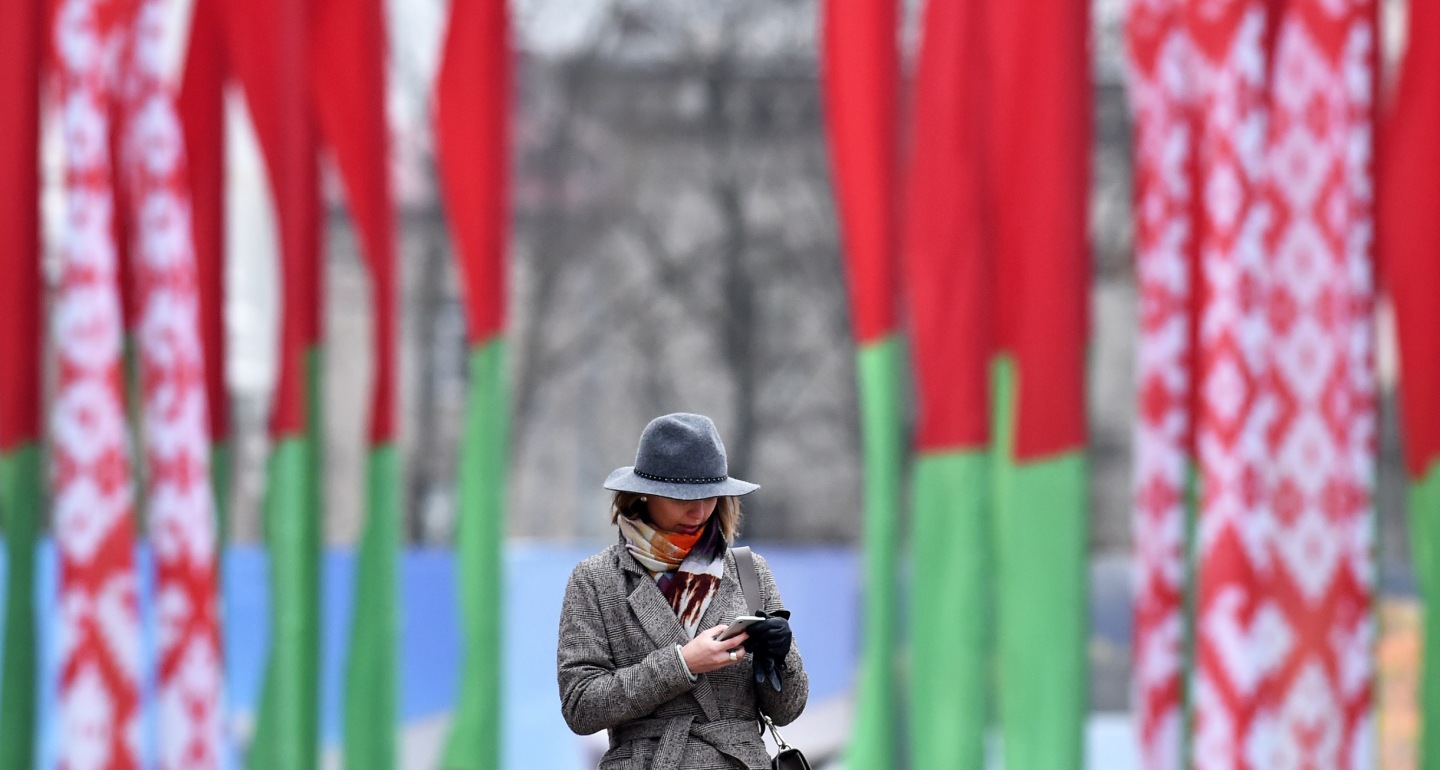
For Lukashenko, abandoning Western internet services and embracing Russian equivalents would mean tying himself even closer to Moscow.
It’s a running joke that Belarusians are a season ahead of their Russian counterparts when it comes to the TV series that is political repression in their respective countries. However, the Kremlin’s bid to establish total control over the internet in recent months appears to be an exception to this rule. Suddenly, Belarus looks like an oasis of online freedom to Russians: a place where messaging apps, Western platforms, and virtual private networks (VPNs) used to bypass restrictions still work, and where there are no internet shutdowns or “whitelists.” Russians are increasingly buying property in Belarus, and there are even serious online discussions about the pros and cons of relocating to Minsk.
By many measures, the contested Belarusian leader Alexander Lukashenko’s regime remains significantly more repressive than that in Russia. But different approaches to online crackdowns in the neighboring countries mean that, paradoxically, apolitical Russians are feeling the online presence of the state’s iron fist more than their Belarusian counterparts.
While the Belarusian regime fastidiously blocks opposition content, it keeps the focus on regime critics and does not restrict access to entire platforms or messaging apps. In other words, in the battle to stop the spread of “dangerous” information, it targets the consumer.
Belarus’s list of banned “extremist material” contains about 10,000 entries, including books, paintings, websites, personal social media accounts, chats, and online communities. Any interaction with such content (from “liking” it on social media to a subscription or traces left in browsing histories) can be punished. Usually, this would be a brief spell in detention or a fine, but it could also result in a person losing their job. It’s also possible to come to the attention of the authorities because of a minor administrative infringement and end up entangled in something far more serious.
In this way, the Belarusian authorities want people to learn to avoid opposition content at all costs. As no one could possibly keep up with the regularly updated list of “extremist material,” Belarusians are supposed to have an instinctive reaction: if they see something critical of the authorities, they close the webpage, unsubscribe, and delete all traces from their phones.
In return, the regime does not deprive Belarusians of entire online services, and only imposes internet shutdowns—or blocks social media sites, messaging apps, and YouTube—in emergencies. In the past, this tended to be localized shutdowns in places where opposition protests were taking place.
Since the regime crackdown in 2020 that made protests all but impossible, shutdowns have become less frequent. Now such interventions are increasingly idiosyncratic. YouTube is blocked for a few minutes on New Year’s Eve so that Belarusians can’t watch a speech by Sviatlana Tsikhanouskaya, the leader of the country’s opposition in exile, when Lukashenko is making his own traditional New Year’s address to the country. Limits have also been imposed on foreign traffic to Belarusian websites during elections, and on days traditionally associated with opposition demonstrations in the past.
Concentrating on those consuming “dangerous” content is a time-intensive task for the Belarusian authorities. It requires an extensive repressive apparatus, and it normalizes totalitarian practices—like checking the phones of ordinary people. But it does mean that the majority of the population, who don’t want to “get involved” in politics, can be left in relative peace.
In other words, it’s a very different path to that chosen by the Kremlin, which apparently wants all Russians to change their online habits. The gulf between the two countries is best illustrated by a recent discussion in Belarus about YouTube, which is now officially blocked in Russia.
The head of Belarusian state television Ivan Eismont has said for years that YouTube isn’t blocked there because Belarusian TV channels have an active presence on the video-sharing site. When three major Belarusian state media channels were blocked by the site in April, there was no retaliation from Minsk. Information Minister Dmitry Zhuk even said the onus was on the authorities to work better with YouTube, since Belarusians were used to it.
While all autocracies restrict freedoms, they also try to avoid unpopular changes that politicize broad swaths of the population. Despite the traumatic experience of 2020 when he almost lost power amid mass protests, Lukashenko has sought to preserve this balance. In Russia, however, recent months have seen a shift toward prioritizing greater control over the risk of fueling discontent.
It’s possible that the Russian regime has simply been spoiled by its high approval ratings—which are unthinkable for Lukashenko. While news about Putin’s popularity slipping below 70 percent is seen by the Russian media as a reason for Kremlin concern, Lukashenko has had periods when he was only backed by 20 to 30 percent of the electorate.
Of course, Lukashenko’s pragmatism when it comes to the internet might not last forever. He may decide that the calculation of risk has changed—or the Kremlin might demand that Belarus adopt Russia’s policies.
However, there are more fundamental reasons for the autocrats in Minsk and Moscow to have different approaches, which reflect the different directions in which they want to lead their countries. For Lukashenko, the current isolation is a temporary phase after which Belarus should once again reconnect to the global economy, act as a bridge between West and East, attract foreign investment, and trade with the EU and Ukraine.
For this reason, even the most draconian Belarusian internet restrictions are strictly functional: designed to guarantee the survival of the regime, not build a “Belarusian firewall” to cut the country off from the rest of the world for good.
Russia, meanwhile, appears to be more determined to rid itself of anything that could be seen as leverage for its enemies. If society is vulnerable, the thinking goes, it needs to be protected, even if that requires breaking some habits. Since the Russian state considers itself to be a civilization, it should be self-sufficient in everything.
Belarus and Russia also have different starting points when it comes to digital sovereignty. While Russia can create domestic analogues to blocked Western services (or at least believes it can), Belarus cannot. Minsk’s only choice is whether to be connected to the global internet or Russia’s alternative online world.
For Lukashenko, abandoning Western internet services and embracing Russian equivalents would mean tying himself even closer to Moscow. That would not be a problem while he has good relations with the Kremlin. But the moment there were a crisis, such dependency would immediately become a vulnerability.

Nonresident Scholar, Carnegie Russia Eurasia Center
Artyom Shraibman is a nonresident scholar at the Carnegie Russia Eurasia Center.
Recent Work
Artyom Shraibman
Artyom Shraibman
Carnegie does not take institutional positions on public policy issues; the views represented herein are those of the author(s) and do not necessarily reflect the views of Carnegie, its staff, or its trustees.
If it proves impossible for the Russian authorities to avoid a gasoline deficit, the question then becomes how they will organize the distribution of a scarce resource.

Sergey Vakulenko
This year’s wars have made alternative routes to transit through Russia no less risky for Central Asian countries.

Galiya Ibragimova
Reestablishing a dialogue with Moscow is not a goal in its own right. The goal is to guarantee the independence of Ukraine and the peace and security of Europe.
Arkady Moshes
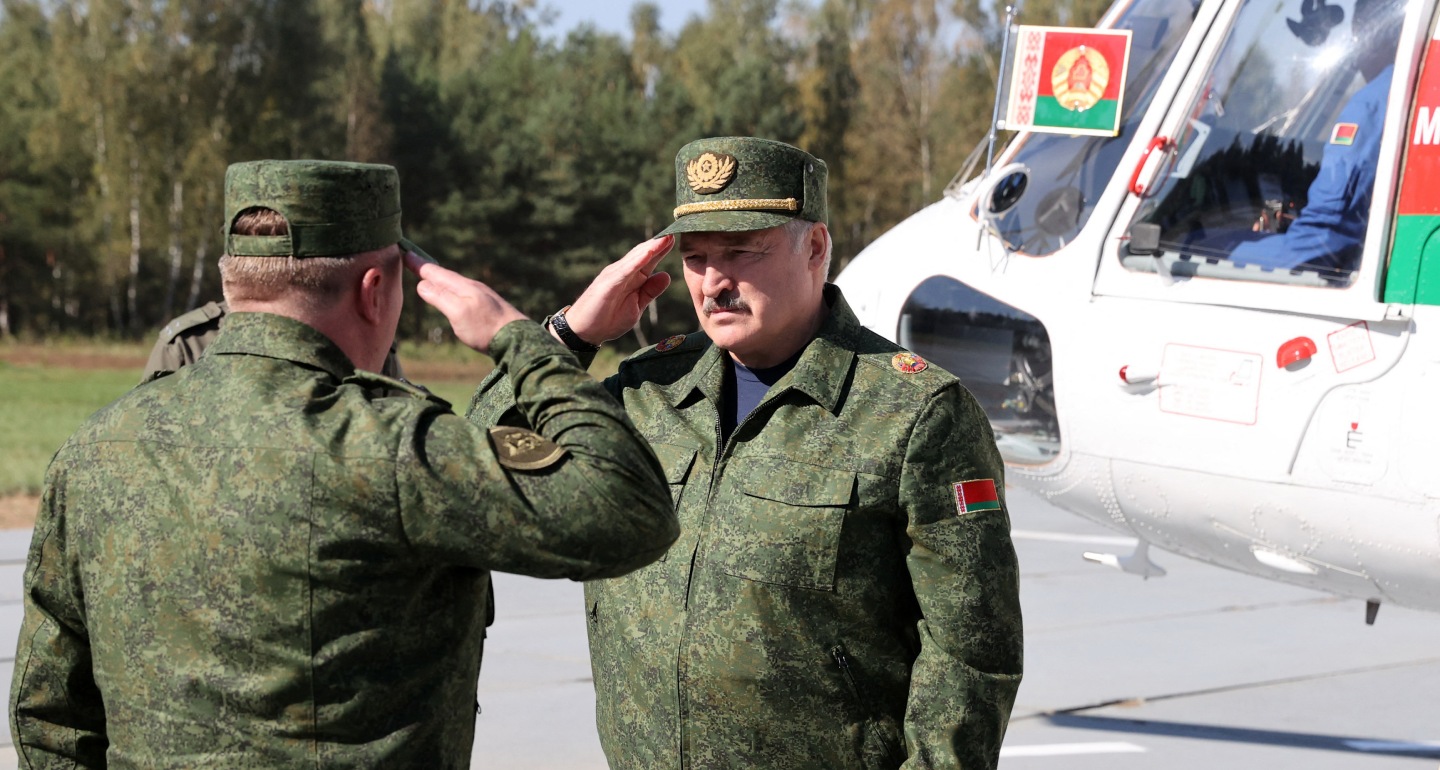
Ukraine’s increasingly confrontational posture on Belarus reflects Kyiv’s effort to shape the emerging regional order in Eastern Europe. Kyiv wants to limit European normalization with Minsk—and any future rapprochement with Russia.

Balázs Jarábik
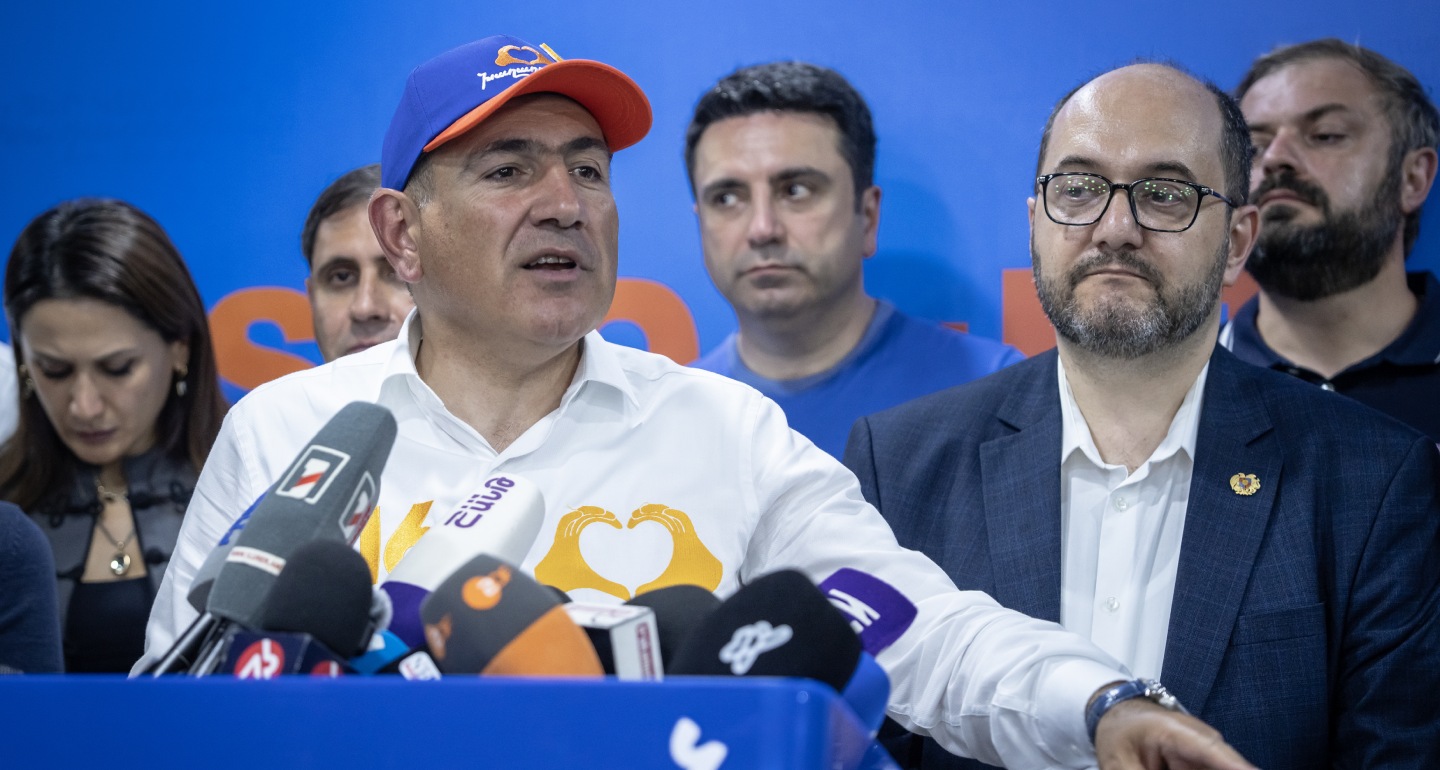
Pashinyan’s pro-European party has been re-elected with a decisive victory. But the pro-Russian opposition could still slow Armenia’s progress toward peace with Azerbaijan and rapprochement with Europe.
Mikayel Zolyan