

Commentary
The Islamic Republic’s words and actions suggest that it has changed its approach to both diplomacy and war.
Mohammad Ayatollahi Tabaar
{
  "authors": [
    "Daniel C. Kurtzer",
    "Aaron David Miller"
  ],
  "type": "commentary",
  "blog": "Emissary",
  "centerAffiliationAll": "dc",
  "centers": [
    "Carnegie Endowment for International Peace"
  ],
  "englishNewsletterAll": "americanStatecraft",
  "nonEnglishNewsletterAll": "",
  "programAffiliation": "ASP",
  "programs": [
    "American Statecraft"
  ],
  "regions": [
    "United States",
    "Iran"
  ],
  "topics": [
    "Foreign Policy",
    "Domestic Politics"
  ]
}
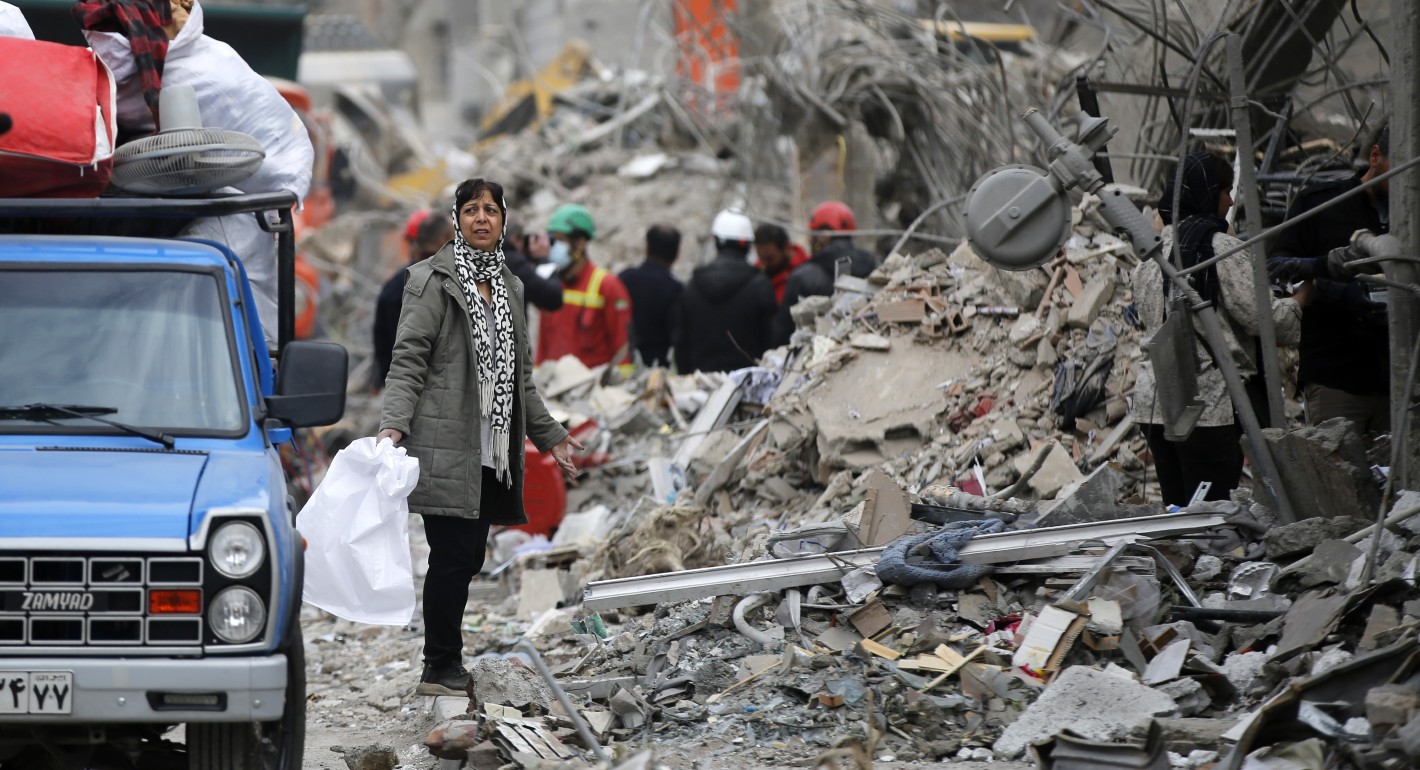
A woman walks among the rubble from airstrikes in Tehran on March 12, 2026. (Photo by Fatemeh Bahrami/Anadolu via Getty Images)
Here’s why—and what the next president needs to do to fix the process.
American foreign policy has always been a highly personalized reflection of a president’s predispositions, ambitions, and concerns. However, presidents normally don’t act solely on their instincts. Instead, they draw on and benefit from the institutional strength of the government and the interagency process embedded in national security legislation that produce the raw intelligence, value-added analysis, policy proposals, and risk-benefit assessments to decide policy. The system is not without flaws, it doesn’t always work smoothly, and it cannot guarantee positive outcomes. But, like the checks and balances within our system of constitutional governance, the foreign policy system is a much better way to make policy than relying on the individual whims, personal interests, foibles, and prejudices of the chief executive.
Enter President Donald Trump’s war with Iran. The conflict is the poster child for a system of broken policymaking that’s resulted from the hollowing out of the national security bureaucracy, the devaluation of expertise and experience, and the highly personalized disposition of this president. These dysfunctionalities have led to a succession of foreign policy failures, ranging from unsuccessful U.S. diplomacy in the Russia-Ukraine war, the collapse of diplomacy before the two U.S.-Israeli attacks on Iran, the stalemate in implementing the second phase of the Gaza ceasefire, and—more generally—the fracturing of almost all U.S. alliances globally.
These are not irreversible outcomes, but they are trends that need to be reversed. The conceptual elements and the mechanisms of smart policy, smart diplomacy, and smart warmaking have guided us in the past. We have seen firsthand effective policymaking in both Republican and Democratic administrations, and although the results have not always led to success, the process has been smart and sustainable. A proper understanding of what constitutes smart policymaking, smart diplomacy, and smart warmaking can help guide Washington back to a much more successful path.
Competent presidential leadership is defined by judgment, wisdom, and experience, among a myriad of other personal characteristics. Wise presidents surround themselves with the best and the brightest who will provide sound advice and options. Perhaps most importantly, a president needs to avoid the sins of omnipotence and omniscience. He needs to think and act with humility and without hubris and arrogance, while using to good advantage the strength of the 250-year-old American system.
Since 1945, the United States has enjoyed unquestioned military superiority—a tool unavailable to any other global leader. The United States has also built a network of extraordinary security alliances, the most important of which has been NATO, that greatly enhance American power. Indeed, until Russia’s invasion of Ukraine, no adversary was foolish enough to test the vitality of our alliances.
But military dominance has always needed to be tempered by the willingness to recognize the limitations and destructiveness of that power. There never was a question that the U.S. military would win confrontations in Grenada, or Iraq, or Venezuela, or even Iran. Where we have come up short too often is the failure to define a strategic and achievable outcome in postwar diplomacy. Finding a willing Delcy Rodriguez is not a substitute for a sustained American policy that translates military successes into positive diplomatic outcomes. It is critical, therefore, that the policymaking process and the diplomatic process be as strong and vibrant as our military power.
Many, if not most, of the challenges that the current administration has faced in translating the president’s policy preferences into successful outcomes could have been avoided if there had been more discipline in the policymaking process. Our favorite tools derive from lessons learned the hard way from the policies and diplomacy of previous administrations. They are not carved in stone, and they are not a checklist or sequential, but they are worth studying.
A coherent policy process
The chances of good policy flow from a clear assessment of the national interest, prioritizing the many issues that compete for attention, balancing ends and means, and avoiding overreach. The exemplar of this is how the George H. W. Bush administration handled Iraq’s 1990 invasion of Kuwait and the preparation for the war that liberated Kuwait. Bush determined immediately that Iraq’s aggression would not stand—he drew a so-called line in the sand—and his administration launched three lines of policy. Through persistent diplomacy, the United States pushed eleven resolutions through the UN Security Council that provided international legal authority for the actions taken subsequently against Iraq. These resolutions also paved the way for the second line of effort, namely, the composition of an international military coalition. With the legitimacy conferred by the Security Council, more than thirty-five countries joined the coalition, including three key Arab states: Egypt, Syria, and Saudi Arabia. The third line of effort brought in financial support from countries that did not contribute troops.
The administration also engaged in high-stakes diplomacy. The United States persuaded Israel not to respond to possible Iraqi missile attacks, out of concern that Israeli involvement could unravel the military coalition. And Secretary of State James Baker was dispatched to Geneva on a last-ditch mission to persuade the Iraqis to withdraw before military action was taken. Although the Iraqis remained adamant, the investment in diplomacy at the eleventh hour kept a wary Soviet Union at bay.
A critical element of the administration’s success derived from the extraordinary cohesion of the interagency process, Baker’s diplomatic prowess, and Bush’s determination to push Iraq out of Kuwait without going beyond the UN Security Council mandate. The whole-of-government effort—led by a strong national security adviser, Brent Scowcroft—was marked by clarity of purpose and direction, the articulation of achievable goals, diplomatic professionalism, and presidential determination.
Valuing diplomacy
The relationship between Bush and Baker was unique in American history: two longstanding friends with strong personalities, but both willing to speak with one voice once a decision was made. They also shared an eagerness to bring professionals with experience and expertise into the inner circle of policy and diplomacy. Like so many other administrations, the Bush administration initially closed ranks and kept professionals at bay. But, within a short period of time, the administration recognized that professionals were just that and that they would live up to their public service commitment irrespective of the political party of the incumbent president.
Baker’s Middle East peace team—in which both authors served—was small but with diverse views about policy. Baker came to value our input specifically because he knew it derived from long and deep arguments. Baker also had a voracious appetite to understand the substance of the issues under negotiations. We fed him memo after memo describing the often arcane elements of Arab-Israeli history and narratives, which we believed he needed to understand when facing off with Arabs and Israelis who lived and breathed these narratives and this history. And Baker was open to opposing views, sometimes changing his mind on a critical issue once he heard the arguments in favor of an alternative approach. Both Bush and Baker welcomed staff who were willing to speak truth to power.
Balancing and alliances
During the runup to the 1991 Gulf War and in the diplomacy that followed (and led to the Madrid peace conference), the international arena was in a period of significant flux. Iraq and Iran had just emerged from a brutal eight-year war, and before the invasion, Iraq was clearly in an aggressive mood. Palestinians in the occupied territories had launched an uprising, the Intifada, expressing their anger and frustration over the Israeli occupation policy and actions. Most important, the Soviet Union was unraveling, and Soviet satellite states were left to contemplate a different future.
Understanding the nature and implications of these global changes underway, the administration worked more closely than ever with allies, marked by ongoing consultations and a willingness to listen, not lecture. The allies responded by participating actively in both the diplomatic and military effort.
Most interestingly, when the Soviet Union finally collapsed overnight in December 1991, the administration did not declare victory in the Cold War. Instead, anticipating that a new reality was unfolding, it invited the Soviet Union to be a co-sponsor of the peace process and co-host of the Madrid conference. U.S. diplomats kept in touch with their Soviet counterparts during this period but expected little help, since the USSR was consumed by internal change. But the fact of Soviet co-sponsorship was important in sending a signal to former Soviet client states that it was okay to participate in the peace process.
It would be naïve to think that all or even much of what transpired forty years ago is transferable today, in far different domestic and international circumstances. But unless as much as possible of this is assimilated, current and future administrations are likely to make and remake the same mistakes.
Just look at the administration of George W. Bush. His staff was filled with experienced foreign policy hands, a number of whom had served during his father’s term. Yes, 9/11 understandably induced fear of another attack and the need to prevent and preempt, not just react. But it was a serious misjudgment, to say the least, to think they could easily transform Afghanistan and Iraq through military might, long military occupation, and no diplomatic plan. It was wrong in 2011, when the Syrian civil war broke out, for President Barack Obama to declare that “Assad must go” without having the vaguest idea of how to achieve that goal, or to create a public red line on the Syrian regime’s use of chemical weapons, only to fail to deal with it. It was wrong for Trump to throw the Iran nuclear deal overboard in 2018 without considering the consequences, all of which have led to the quagmire we are now experiencing in Iran. And it was wrong for President Joe Biden to give Israel a bright green light in Gaza that created such devastating human outcomes after the horrendous Hamas attack on October 7, 2023.
Obama was absolutely right when he told The Atlantic’s Jeffrey Goldberg in 2016 that his approach to foreign policy was basically “don’t do stupid shit.” That certainly is a place to begin. But avoiding stupid shit and advancing U.S. national interests requires much more: a president with prudence, judgment, and curiosity; a system of structured decisionmaking; a group of advisers willing and able to provide sound advice no matter how inconvenient and unpopular; and a president willing to listen to advice. Sadly, the past seven weeks demonstrate what happens when none of those elements are anywhere to be found in the Oval Office.

Daniel C. Kurtzer
Lecturer and S. Daniel Abraham Professor of Middle East Policy Studies, Princeton University
Daniel C. Kurtzer is the S. Daniel Abraham Professor of Middle East Policy Studies at Princeton University’s School of Public and International Affairs. During a twenty-nine-year career in the U.S. Foreign Service, Ambassador Kurtzer served as the U.S. ambassador to Israel and as the U.S. ambassador to Egypt. He was also a speechwriter and member of secretary of state George P. Shultz’s Policy Planning Staff and served as deputy assistant secretary for Near Eastern Affairs and principal deputy assistant secretary for Intelligence and Research.

Senior Fellow, American Statecraft Program
Aaron David Miller is a senior fellow at the Carnegie Endowment for International Peace, focusing on U.S. foreign policy.
Carnegie does not take institutional positions on public policy issues; the views represented herein are those of the author(s) and do not necessarily reflect the views of Carnegie, its staff, or its trustees.
The Islamic Republic’s words and actions suggest that it has changed its approach to both diplomacy and war.
Mohammad Ayatollahi Tabaar
Why the outcomes of the U.S.-China meetings may be limited.

Aaron David Miller, David Rennie

Instead, governments should adopt climate-friendly measures to address the impact of rising prices.
Henok Asmelash
Tehran may conclude that its ability to disrupt the global economy via the Strait of Hormuz provides enough deterrence to begin quietly rebuilding its nuclear program.

Jane Darby Menton, Mohammad Ayatollahi Tabaar
The conflict is exposing the flaws and fissures of their domestic governance and social cohesion.

Frederic Wehrey, Charles H. Johnson