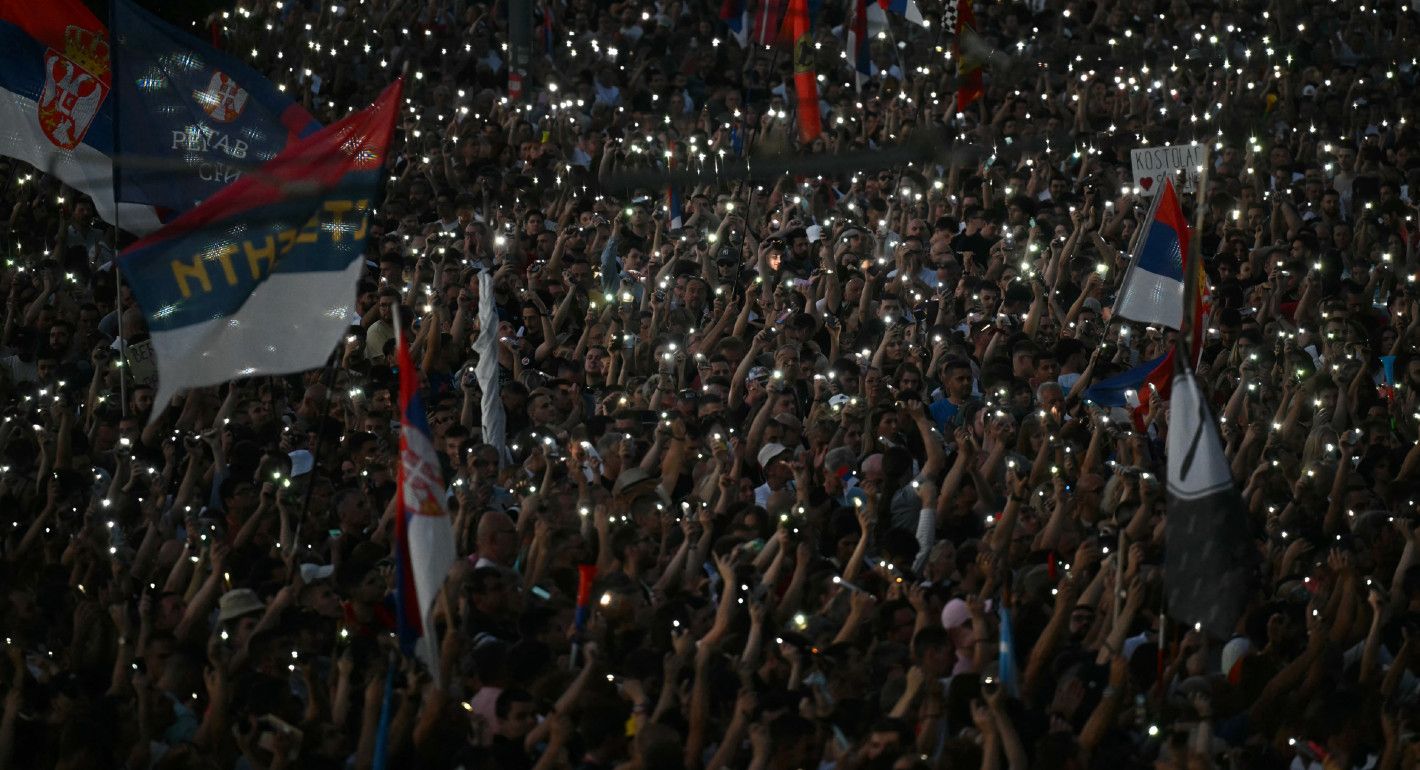
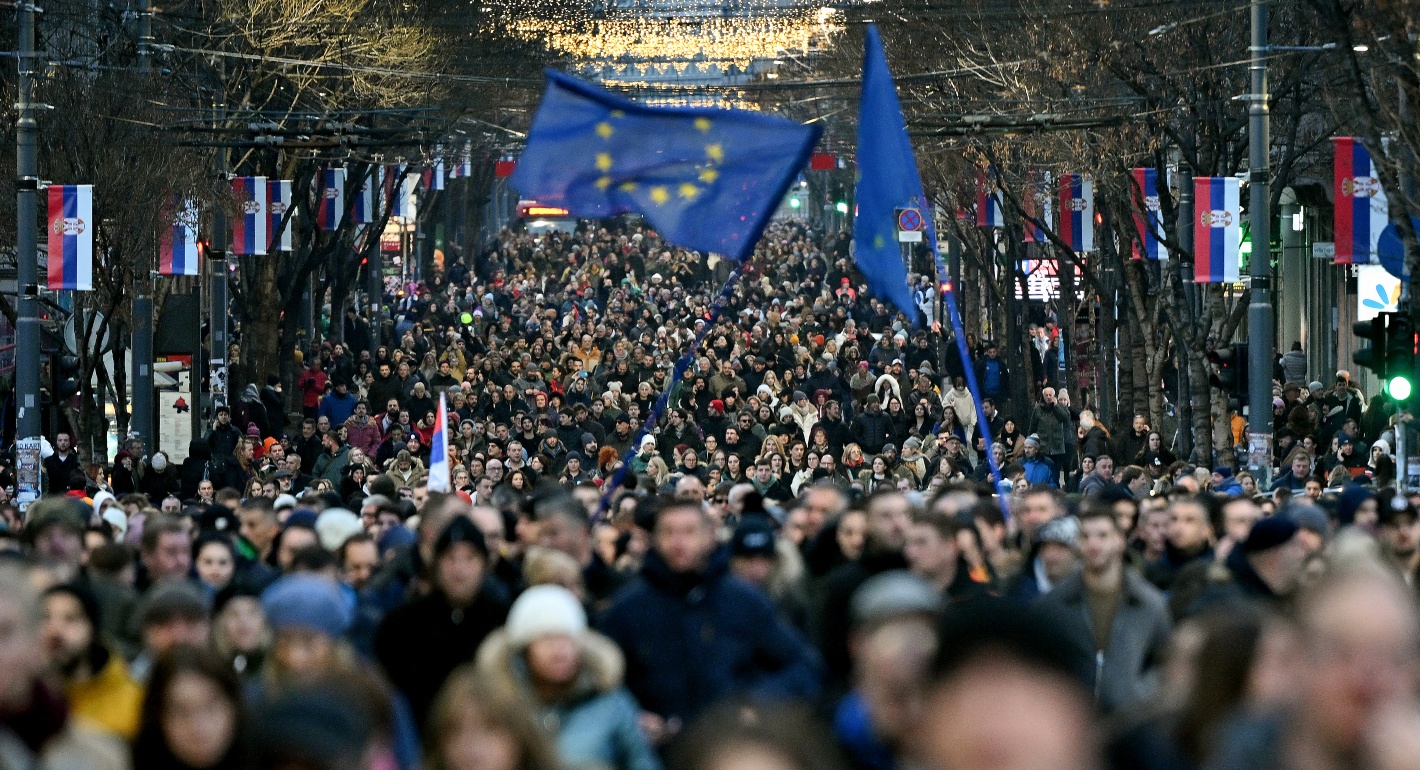
In a small number of cases, the new winds from Washington have triggered a notable increase in European democracy support. At the EU level, this is most evident in EU membership candidate countries: The EU has increased its focus on protecting democracy in Moldova and Ukraine and started to tighten democratic conditionality in Serbia and some other Balkan candidates. Several European donors have stepped in to offer additional funding to some of the many local democracy organizations around the world put at risk by the sudden cuts in U.S. aid. This has included government donors such as Sweden and the European Commission and, perhaps most notably, more flexible funders such as the European Endowment for Democracy.
Overall, however, the level of European democracy aid has not increased. Indeed, France, Germany, the Netherlands, Sweden, and others have all cut democracy aid funding since early 2025 as part of overall, broader aid reductions. EU-level funding is defined by multiyear budgets so does not change quickly. The EU is currently planning its new external funding that will begin in 2027; the current proposal is for a significant increase in external aid but for the budget dedicated specially to democracy and human rights to be discontinued. The European Commission argues this will help streamline funding and make it more flexible, and that democracy aid will be more mainstreamed within other areas of funding. Yet if the ring-fenced budget for democracy disappears, this will add a great deal of uncertainty over future levels of aid for democracy and human right projects. With the EU keen to use funds for other priorities like security and migration control, there is a risk that the amounts going to stand-alone democracy work could fall. Moreover, the new budget does maintain a ring-fenced share for issues such as climate funding, apparently undermining the commission’s own argument against specifying protected amounts for certain issues. These changes could herald a major change given that the European Commission’s external aid budget has long been the largest source of overall European democracy aid funding.
Feeling vulnerable as Washington has become increasingly hostile to Europe, European governments have pushed a range of new EU strategic partnerships with states or multistate groupings such as Australia, Canada, India, and Mercosur. These partnerships are framed as alliances to uphold democratic values, though in practice they are mainly focused on trade and defense cooperation. They nevertheless signal a European intention to offset Trump with a reshaped approach toward democratic partners.
Other elements of European external policies point rather toward a weakening of democracy policy. Alongside its partnerships with other democracies, the EU has deepened cooperation with many autocratic regimes, such as in the Gulf, and declined to respond in any critical manner to attacks on democratic norms in many places. Under its global human rights sanctions regime, the EU listed only nineteen names in 2025 and rarely responded in critical fashion to major democratic infringements. Within Europe, the U.S. interventions in Iran and Venezuela have put the spotlight on Europe’s own defense of international law, and to some extent this has crowded out rather than spurred greater democracy support. Most European efforts to move closer to other democracies are not related to democracy: French President Emmanuel Macron, for example, has proposed an alliance among the EU, Japan, South Korea, and Brazil on trade and economic issues against Trump—but nothing similar on democracy.
Other elements of European external policies point rather toward a weakening of democracy policy.
European governments outside the EU show some signs of reconsidering their democracy strategies. The Swiss government made a notably prioritized commitment to democracy support in 2025 and sought to position itself as a key convener among the democratic community in response to the U.S. policy inversion. It formulated new Guidelines on Democracy for its foreign policy and defined democracy as one of its main foreign policy goals. It committed to a new “democracy diplomacy” that would use Switzerland’s good offices to bring together new democratic actors, push to maintain scope within multilateral bodies to cooperate on some democratic norms, and focus on the early stages of democratic backsliding and instances of possible democratic opportunity in select countries around the world. This entailed concrete moves to embed a focus on democratic governance across other areas of foreign policy. Still, Switzerland is also cutting overall aid amounts; it is not yet clear how much this will affect democracy aid, specifically.
The UK has been prominent in the European landscape in reframing democracy support as a core security interest and in trying to coalesce global democracies around a post-U.S. democracy agenda. However, the Keir Starmer government reduced aid to 0.3 percent of GDP, the lowest level for fifty years. Democracy aid has been disproportionately cut, and some of the aid budget that remains is now spent on refugee centers in the UK, stretching the traditionally accepted definition of official development assistance. The UK’s 2023 Integrated Review Refresh, an umbrella template for foreign policy, stressed pragmatic cooperation with nondemocratic middle powers, and its 2025 Strategic Defence Review made no mention of support for democratic values. At the same time, Starmer and other senior officials have in recent months spoken of defending democracy as a core value of UK foreign policy. And the UK has stepped up to cochair the Open Government Partnership and the Media Freedom Coalition. Many in the field now lament that the UK has ceased to have the necessary resources or will to be a serious player in democracy support, even as British diplomats insist the UK should be a natural coordinating focal point for new democratic coalitions.
Outside of Europe, Canada and Australia have rhetorically championed middle power cooperation in response to the rupture of the existing international order and the reemergence of great power geopolitics. One consequence of this has been an increased focus on security partnerships with governments of different political stripes and decreased efforts toward official development assistance, including democratic governance support. Canada has cut aid in order to build up hard power capabilities, such as its Arctic security presence and capability. Prime Minister Mark Carney’s widely lauded 2026 Davos speech calling for middle power cooperation emphasized cooperation on the basis of “shared objectives,” with a nod both to pragmatism and principle, and thus was not a decisive move in terms of heightened attention to democracy support. Instead, Carney announced that Canada would “actively take on the world as it is, not wait around for a world we wish to be.” Canada has moved to develop deeper partnerships with European and other democracies as it seeks protective insulation and distance from the Trump administration. Carney was the first non-European leader to join the European Political Community at its summit in May 2026, which prioritized the issue of democratic resilience. Canada has joined the EU’s new defense fund and has aligned with some of the bloc’s efforts on defending human rights, observing elections, and countering foreign information manipulation.
In East Asia, Japan, South Korea, and Taiwan also represent traditionally active players on international democracy support. They have modestly upgraded democracy commitments but generally remain cautious and nonconfrontational in how they pursue this agenda. Their democracy policies and programs are only rarely directed at the nondemocratic elephant in the room, China. Japan has exerted some increased pressure on the Thai military junta, suggesting that it would cut aid funds and investment if the regime did not hold elections. It has moved since 2025 to deepen ties with Mongolia as part of an effort to ally democracies in the region more tightly. Japan has supported work further afield too, for example on improving democratic standards in Ethiopia’s electoral process. In 2025, Japanese parliamentarians launched a new initiative to strengthen Japan’s international support for democratic values.
[East Asian democracies] have modestly upgraded democracy commitments but generally remain cautious and nonconfrontational in how they pursue this agenda.
South Korea is one of the most notable recent examples of an established democracy resisting a moment of threat: After imposing martial law at the end of 2024, then president Yoon Suk Yeol was ejected from power and impeached. Ironically, the Yoon administration had prioritized democracy support in its foreign policy, hosting the Summit for Democracy twice and allocating $100 million for democracy projects across the Indo-Pacific, from late 2024. The new administration of President Lee Jae Myung that was inaugurated in June 2025 remains supportive of democracy but with a more cautious and pragmatic foreign policy. Its priority has been to promote a Global AI Basic Society. This is not democracy promotion but does address related issues of open, participative, and accountable AI and data governance. While cautious on directly confronting authoritarian regimes, the new government has pressed the need for middle power coalitions without the United States.
The Trump administration’s ambiguous policy shifts relating to China appear to leave Taiwan in an even more precarious position than it was previously. As it faces escalating military pressure from China, the Taiwanese government has pledged to widen and extend its “democratic supply chains.” In 2015, Taiwan and the United States founded and ran the Global Cooperation and Training Framework (GCTF) to facilitate transnational cooperation on human rights, digital governance, public health, and other pressing global issues. In response to the policy uncertainties generated by the second Trump administration, Taiwan has successfully expanded this network to include Australia, Canada, Japan, and the United Kingdom. Taiwan has also stepped up its democracy support initiatives through the Taiwan Foundation for Democracy.
Emerging Democratic Actors
In many of the debates, events, and gatherings that have taken place over the past year on the future of international democracy support, it has been common to hear people arguing in favor of Global South democracies playing a more prominent and shaping role in global democracy strategies. Such a restructuring of the international democracy architecture is an appealing idea that seems to fit the current moment. And indeed, numerous democracies around the world—beyond the traditional set of wealthy established democracies that engage in democracy support—do espouse commitments to protecting democratic values transnationally and speak of the need for increased attention to the topic in the current moment. As yet, however, there have been few significant policy actions by such governments that move tangibly forward in this direction.
Latin America
Despite regional institutional structures designed to protect democracy within Latin America, these avenues have for some time been clogged by the sharp right-left divisions within and among most countries in the region. These regional mechanisms have failed for years to make a difference in Venezuela, the most significant case of autocratization in Latin America, as the Nicolás Maduro regime proved resistant to regional pressure. On top of this, the newly assertive U.S. role in the region’s politics, evidenced most dramatically in Venezuela and Cuba but also in the Trump administration’s skirmishing with Brazil over the prosecution of Jair Bolsonaro, has further sidelined regional diplomatic engagement on democracy and rights.
In the new Trump context, Brazil has not developed a transnational democracy strategy or introduced any funding for democracy, and Brazilian diplomats and analysts have tended to interpret Trump II as proof that they were right in their long-standing criticisms of the liberal elements of global order and their pursuit of pragmatic hedging in international relations. At the same time, Brazil’s democratic identity has recovered from the Bolsonaro years, and the Luiz Inácio Lula da Silva government has deployed a discourse of greater international cooperation being needed to protect democratic values from far-right forces. Brazil is prominent in some recent minilateral initiatives—as outlined in the next section—that have some relation to a liberal-values agenda even if not democracy as such.
Chile emerged as a strong democracy supporter under Gabriel Boric (2022–2026), but its commitment is now uncertain under the hard-right new administration of President José Antonio Kast. Costa Rica stepped forward to host a regional strand of the Summit for Democracy process when Joe Biden was U.S. president and remains strongly committed in principle to the democracy agenda. Bolivia has returned in the past year to a more democratic path, helped by some regional support. But overall, the continent’s rightward shift seems to take more governments toward Trumpian foreign policy and away from external democracy support.
A small number of democracies in the region—including Chile, Costa Rica, Guatemala, and Uruguay—have in recent years tried to mobilize Latin American regional mechanisms of democracy support, but political division in the region has weakened the Organization of American States (OAS). The Trump administration promised to support the OAS’s democracy mission, a contrast to its policies elsewhere. However, the administration has further polarized governments in the region in a way that undermines the prospects of effective democracy support policies—Trump’s new grouping of right-wing leaders that met in March 2026 clearly draws many Latin American governments away from any united democracy agenda.
The region’s formal democracy commitments are strong. Yet, Latin American democracies put little concrete substance or resources into democracy support, beyond the rhetoric. In 2025, the overall budget allocated to the OAS was $92 million, of which only $5.2 million was allocated to the Secretariat for Strengthening Democracy. The OAS does not have a dedicated democracy aid budget as such and so offers limited material support to civic activists or digital rights organizations; indeed, some governments in the region have clamped down against civil society rather than funding projects to empower it. Moreover, these are all instruments aimed at protecting democratic governments from authoritarian coups and other challenges within Latin America itself: There are relatively few signs of Latin America’s progressive prodemocratic governments or regional bodies looking outward to partner with other regions in the name of a global democracy agenda.
Africa
A small number of African democracies such as Botswana, Ghana, and Namibia have in recent years been rhetorically supportive of prodemocratic diplomatic initiatives. Under the Biden administration, Zambia ran a regional summit of the Summit for Democracy process. In some cases, African democracies have modestly upgraded their long-standing focus on democratic principles at a regional or subregional level. In January 2026, the Gambia took Myanmar to the International Court of Justice accusing Myanmar of genocide against its Muslim Rohingya minority. Still, the region’s democracies do not have democracy assistance programs as such and have generally not developed significantly more tangible democracy policies specifically since early 2025.
The South African government suffered heavily from the USAID cuts and responded with general commitments to ensure its own democracy did not suffer negative consequences. The shift in U.S. policy certainly prompted the South African government to place more stress on a narrative of defending democratic norms that were now more obviously under threat—especially as Trump adopted an increasingly hostile posture toward South Africa. At the same time, its general reaction was similar to that of the Lula government in Brazil, as it insisted that Trump’s policy changes vindicated South Africa’s insistence on nonalignment and nonintrusive global policies, its criticism of the liberal international order, and its engagement with Russia and other autocratic powers. South Africa has become a high-profile and active defender of international law against U.S. and Israeli military actions, an active participant in international conversations around progressive internationalism, and a strong critic of Trump’s hard-right illiberalism—even if it eschews democracy support as such.
With respect to regional mechanisms, the African Union (AU) Peace and Security Council has been notably firm in suspending members where coups have taken place in recent years, including Burkina Faso, Gabon, Guinea, Mali, Niger, and Sudan. However, the region’s nondemocratic governments have held the AU back from stronger democratic commitments. The AU disburses project money from a Peace Fund for conflict prevention and mediation but lacks a democracy-support fund. Most funding that goes through the AU for issues like election monitoring or governance work comes from Western donors. Of subregional organizations, the Economic Community of West African States has the strongest democracy commitments and has continued to take decisions against coups and to undertake election monitoring. At the same time, these commitments have provided a rationale for the coup leaders in Mali, Niger, and Burkina Faso to fracture the regional community and create the Alliance of Sahel States. Overall, within these regional mechanisms, there remains little concrete evidence of specific prodemocratic responses to the Trump administration’s policy shift.
Asia
Beyond the three East Asian states of Japan, South Korea, and Taiwan, Asian democratic governments remain cautious and even skeptical about international democracy support. There is little evidence that the U.S. policy shift has made them more receptive to this agenda. They lack dedicated national policies to support democracy at the regional level, and much of the debate within the region on such issues has focused on the regional role of the Association of Southeast Asian Nations (ASEAN). In adopting the ASEAN Charter in 2007, member states formally committed to upholding democratic values. This commitment has led to the establishment of human rights mechanisms such as the ASEAN Intergovernmental Commission on Human Rights. ASEAN also includes a People’s Forum and mechanisms to engage civil society groups with accredited status. Indonesia is among the member states that has at points pushed the democracy agenda. In 2008, Indonesia inaugurated the Bali Democracy Forum, an annual meeting platform designed to promote and foster regional cooperation on peace and democracy through dialogue and sharing best practices. Indonesia, Malaysia, and Thailand have organized human rights dialogues in ASEAN. Over many years these efforts have experienced periods of advancement and stagnation; they retain a modest degree of traction but have not enjoyed any detectable advancement during the past year.
India maintains a stance on democracy support similar to Brazil—traditionally skeptical of Western democracy support and committed to a policy of great power balancing. This balancing has intensified amid the volatility of India’s relations with Washington under Trump—a dynamic complicated by India’s simultaneous need to maintain its security and energy ties with Russia while hedging against an increasingly assertive China. Internationally, India projects pride in its democratic identity, with Prime Minister Narendra Modi frequently calling India the “Mother of Democracy.” India has for years offered external democratic support through the Indian Technical and Economic Cooperation program, and India’s Election Commission provides extensive training, capacity building, and election support, particularly providing training and technical support on electronic voting machines, to dozens of countries in the Global South. India sees itself as a supporter of democracy in its immediate neighborhood, offering electoral cooperation to Sri Lanka in 2024 and Nepal in early 2026. At the same time, it has in some cases adopted positions less supportive of democracy in its neighborhood. It was, for example, a steadfast backer of Bangladeshi prime minister Sheikh Hasina even as her regime grew increasingly authoritarian, and it opposed the 2024 student-led protests that ultimately led to her ouster. Moreover, India’s own democratic regression sits uneasily with a prodemocracy external identity. The second Trump administration’s policy shifts toward America First have reinforced India’s long-standing skepticism about Western democracy support. India has not developed visibly stronger democracy support policies since early 2025.
In sum, the developments in Latin America, Africa, and Southeast and South Asia point to some interest in offsetting the U.S. antidemocratic turn but no well-organized cluster of new actors emerging to fashion a different kind of democracy support agenda. While most governments looking to support a prodemocratic stance beyond their borders put their eggs in the basket of regional organizations, such organizations remain relatively weak players on democracy issues, despite some sharpening of their formal democracy commitments. Moreover, while some governments in these regions seek to harness regional mechanisms in more steadfast defense of democratic values, others have blocked stronger democracy initiatives. Overall, regional organizations’ democracy strategies remain cautious and lack the power needed to confront undemocratic trends in many of their member states. They lack dedicated democracy support funding to give concrete substance to their formal democracy commitments.
Global Democratic Cooperation
The Trump administration’s hostility to the United Nations has negated the possibility of diplomatic cooperation tied to the UN on essentially any issues, including democracy. UN diplomatic initiatives on democracy support had lost most of their traction even before Trump took office and now look even more moribund. At the same time, the United Nations Development Programme remains a large funder of aid programs aimed at strengthening democratic governance in the developing world.
No obvious replacement for the United States as a global convenor on democracy issues has emerged. No government stepped forward, for example, to help continue Biden’s Summit for Democracy process. As suggestions have resurfaced for a so-called D7 alliance linking Asian and European democracies, governments have not taken this forward. Similarly, new calls for a so-called CANZUK democratic alliance made up of Australia, Canada, New Zealand, and the UK have not been taken up by the governments in question. Governments also declined to put their support behind a grouping of democracies based around the notion of a “Europe-plus”—European states plus Australia, Canada, Japan, New Zealand, South Korea, and Taiwan. The Community of Democracies organization, in operation since 2000, has long struggled to gain momentum, a task even harder now given that the United States was originally its main proponent. The IBSA grouping (made up of India, Brazil, and South Africa), which might have become a nucleus for prodemocracy cooperation among non-Western democracies, has remained very much secondary to the more authoritarian-oriented BRICS format.
But beyond the UN and the actions of individual governments via existing regional bodies, a layer of new cooperative initiatives has emerged among governments across regional boundaries: a noteworthy expansion of cooperative initiatives led by minilateral groupings of governments. This represents one of the most tangible signs of international response on the democracy front to the Trump administration. Such flexible governmental cooperation is likely to play a more significant role in the future, but the optimal formation tailored to democracy-support challenges has not yet emerged.
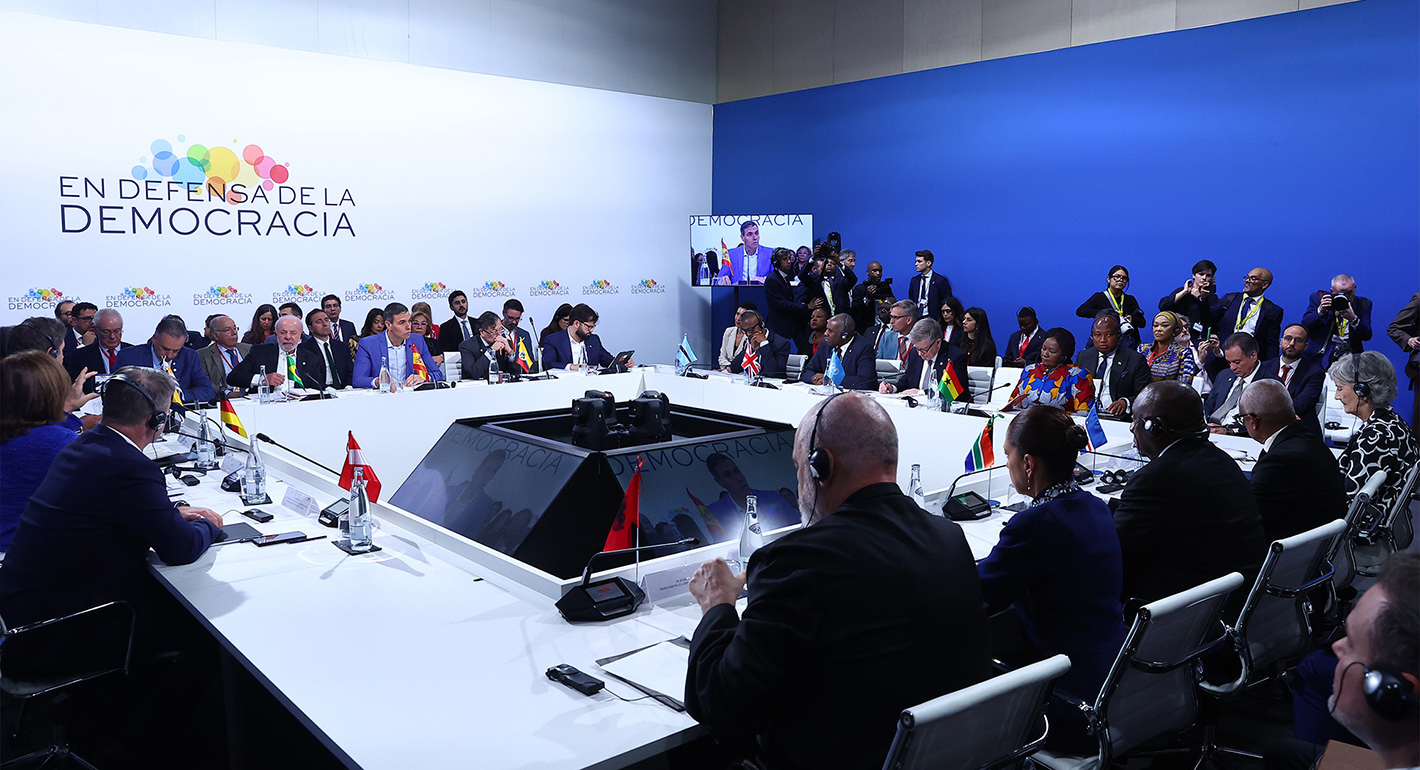
There have been several multilateral initiatives that are bringing together democracy supporters. Brazil, Chile, Colombia, Spain, and Uruguay have teamed up to colead what they term an In Defence of Democracy initiative that promised “democratic diplomacy.” This began in late 2024 and has gained momentum since then, holding several rounds of meetings and summits. It is a partisan initiative of what were at the time all center-left governments framed as a riposte to right-wing threats to democracy. It posits progressive policies as necessary to hold back radical right actors, especially through online protections and social justice measures. The initiative does not come with significant resources but has begun to develop concrete projects on fighting extremism among youth, transparency in algorithms, and strengthening civil society. The alliance has collectively spoken out against Trump’s military actions around a narrative of defending international law; it issued a collective condemnation of the U.S. intervention in Venezuela that called for an “inclusive political process” leading to a “democratic solution” in the country. By its gathering in April 2026, the initiative had morphed even more clearly into a somewhat routine gathering of left-wing parties under the label of Global Progressive Mobilisation and seemed to be moving away from democracy support as such.
Commonwealth ministers adopted a new Nadi Declaration on Democratic Resilience and Participation, along with a range of new democracy support commitments, at the beginning of 2026. In a similar vein, the MIKTA (Mexico, Indonesia, South Korea, Türkiye, and Australia) group issued a commitment to uphold democratic values in late 2025. In bilateral initiatives, various democracies have signed new agreements with each other of different types. Japan and Brazil, Brazil and Indonesia, and South Africa and Indonesia, for example, have recently signed new agreements that are mostly about economic and security priorities but do refer to democratic values. Carney and Modi announced a renewed Canada-India strategic partnership in the wake of U.S. attacks on Iran; this accord was framed in terms of upholding democratic values although its long list of concrete thematic commitments did not include work on democracy support. It is not clear what, if any, tangible substance might flow from all these commitments, although the fact that such groupings have increasingly referred to support for democracy is not without significance.
The fact that such groupings have increasingly referred to support for democracy is not without significance.
For middle powers, counter-Trump collective action is a surging idea and preoccupation. Yet such action is thus far much stronger on trade and security than on democracy. Still, several cooperative initiatives have taken shape that approach democracy issues in an indirect way. They cover either elements adjacent to democracy support or very specific parts of this agenda, rather than democracy in an overarching sense. Coordination between democratic powers has been growing on development, climate action, health, and other issues, around a notion of like-minded internationalism, and even if these areas of cooperation are not overt democracy promotion, they do touch on some aspects of liberal-order principles more generally. The very recent Group of 22 initiative coordinating on freedom of navigation in the Strait of Hormuz is framed in terms of upholding wider liberal-order norms.
Several recent cooperative initiatives focus on economic development challenges that have some relationship with democratic governance. For example, Costa Rica, the Dominican Republic, Ecuador, and Panama formed the Alliance for Development in Democracy in 2022 and have recently sought to upgrade this initiative, including through a new 2025 EU grant for work on defending democracy through counter-disinformation. The development goals at the 2025 UN Second World Summit on Social Development reinforced commitments to democracy; a small group of states also were able to get a new UN resolution on political-party financing passed at the end of 2025. A newly focused World Bank Future of Government initiative includes countries in the Global North and South working on good governance issues related to the development agenda.
Some African democracies have signed agreements on transparency standards in the management of several key development sectors. Brazil pushed an international citizen track in the COP30 climate summit in 2025, which it held and chaired, building more of a focus on community-level mobilization around environmental issues into the multilateral climate architecture. And regarding transparency, democratic coordination on digital rights has become an area of particularly noteworthy expansion. For example, the Freedom Online Coalition, working for online rights, norms, and protections, has expanded to forty-two governments. In October 2025, just over fifty countries convened at the Fourth Ministerial Conference on Feminist Foreign Policies to strengthen and expand international coalitions for gender equality.
Some non-Western democracies have in the past year or two been giving increased public attention to international law, a concern different from but partially overlapping with the democracy agenda. Framed as an effort to protect democratic self-determination under international law in response to the Gaza war, South Africa set up the Hague Group, a coalition of mostly Global South states pledging to uphold international rulings in relation to Palestine and prevent arms transfers to Israel. More than thirty countries have joined the initiative. Ukraine’s Crimea Platform has coordinated with smaller democracies active in parliamentary and summit diplomacy on democratic security, while the Coalition of the Willing that formed to coordinate commitments to Ukraine includes many democracies and middle powers outside Europe and has looked to cover issues other than Ukraine.
Nonstate Initiatives
Enhanced coordination on global democracy issues has gathered more notable pace at the level of nonstate actors. The Trump era has spurred more participative, flexible, and locally rooted cooperation and coordination among international and national civil society actors working on democracy and rights. Increasingly vibrant civic movements in some countries, including the new wave of Gen Z protests in multiple regions, have linked together across borders for democracy-based transnational cooperation. Nonstate activities are not a full substitute for the weight that state actors can bring to democracy support, through diplomatic and economic carrots and sticks and the mobilization of large-scale aid resources. Yet, they can play a valuable role in building transnational solidarity among civic actors, fostering mutual learning across borders, and focusing international attention on key junctures and issues.
There is a visible thickening of networks comprising actors other than national governments—such as local authorities, cultural organizations, legal groups, educational bodies, and different levels of legislatures—aimed at forging increased mutual and often transnational solidarity for democracy. In addition, civil society networks have expanded in number and reach to support democratic actors often through arts, exchanges, and cultural links, as well as in offering support through cryptocurrencies to evade state controls. Civil society organizations (CSOs) agree that the old democracy promotion industry is fading, but that space has opened for global civic diplomacy in supporting democracy internationally. Since 2025, demand has increased from CSO networks to play a higher-profile role on democracy, as the Trump cuts coincided with democratic uprisings and protests around the world and also as fears increased that autocratic donors have become proactive in filling the gap left by U.S. aid cuts for antidemocratic goals.
There is a visible thickening of networks comprising actors other than national governments.
From the large number of examples in this domain, two are highlighted here for the sake of illustration. One notable new initiative is the World Liberty Congress, a network of prodemocracy dissidents. It began in 2023 as an initiative to connect democratic activists in multiple areas with well-known political opposition figures, such as in Hong Kong, Iran, Rwanda, Russia, and Venezuela. The organization held its biggest meeting yet in Berlin in November 2025, with over one hundred activists from sixty-plus countries and regions convening to agree on an upgraded program of work in response to reinforced authoritarian dynamics. In November 2025, the organization released a manifesto for the Democratic Decentralized Resistance, the product of the “collective work of activists, technologists, journalists, human rights defenders, and entrepreneurs.” The World Liberty Congress has a particular focus on training for tech issues, as well as the use of Bitcoin and other ways of getting practical funds to democratic activists who cannot easily receive normal money. It has sought to build alliances with international organizations, governments, and CSOs though an Office for Freedom Affairs designed to be a platform for high-profile advocacy and messaging against autocratic regimes. It has committed to a range of support initiatives among its extensive networks to boost these principles, working to strengthen local infrastructure nodes, provide more active support for human rights defenders and independent journalists, fund more work on anti-censorship tools to amplify online freedom, and pursue the aim of building a free internet. As the initiative has developed, it has expanded beyond its original purpose of linking high-profile opposition leaders to developing more local-level projects.
The Global Democracy Coalition includes more than 160 organizations from over fifty countries. Originally convened in 2021, it moved up several gears in its operations in 2025. Hosted by International IDEA, the coalition is guided by a steering group made up of Afrobarometer, the Alliance for Vietnam’s Democracy, the Alliance of Democracies, Asia Centre, Fundación Multitudes, Partners Global, and Political Watch. In 2025 and 2026, it scaled up a new Emergency Support Fund for democratic actors affected by the cuts in U.S. funding. In a similar initiative, in 2025, fifty so-called democracy champions, mainly from the Global South, met to draw up a new alliance and a global freedom charter.
Long-existing civic networks say their activities have intensified and expanded in a similar fashion, including networks such as the World Movement for Democracy, Democracy Moves, the Accountability Lab, Action for Democracy, and Democracy Without Borders. The Global Defenders Collective has emerged as a new venture formed to get global civil society working together more effectively after the Trump aid cuts. The collective is a voluntary association that joins human rights professionals, public servants, and concerned global citizens with organizations and initiatives around the world that protect human rights defenders in their own communities.
Multinational nongovernmental initiatives relating to democracy have expanded notably in Asia. Democracy defenders from Southeast Asia met in May 2025 to launch a new initiative to protect activists from the increasing wave of government attacks and repression across the region. The United States-Japan Foundation, established over forty-five years ago with funding from Ryōichi Sasakawa, has recently increased its grants to CSOs working in the fields of democracy and human rights. A research institute at Hitotsubashi University has formed a network of Asian researchers dedicated to rescuing democracy advocates at risk. Multiple Asian efforts to establish private funds for democracy support are underway. In Taiwan, organizations such as Doublethink Lab are serving as international hubs for ensuring the integrity of the information space with cutting-edge research and indexing of authoritarian influence operations. In South Korea, retired diplomats and university faculty members have established the Indo Pacific Forum to work on democracy support.
In short, new prodemocracy initiatives are mushrooming at the level of transnational nonstate organizations. They represent vital citizen energy that is coalescing around some key themes in the contemporary democracy domain, such as finding entry points to push back against closed autocratic systems. Yet their weight in the overall balance of political forces globally remains a significant question mark.
Ferment Without Fruition
The widespread alarm at Trump’s shattering of U.S. democracy policy and aid, as well as the sobering reality of continued global democratic slippage, have acted as a wake-up call and prompted a great deal of new discussion and proposals within and among the many governments, multilateral organizations, and civic groups all around the world that are still engaged in supporting democracy internationally. Many democracies that seemed to feel little need to engage actively with democracy support while the United States asserted itself as the primary actor in this domain now at least talk of the need for greater engagement. Moreover, some democracy supporters have even suggested that the U.S. retreat is a welcome opportunity because it might allow democracy support to be disentangled from U.S. policy interests, which has often been a limiting factor for those supportive of the agenda outside the United States. If the main concern of Global South democracies is to defend their own influence in global affairs, they now refer more strongly to the notion of democratic self-determination to help them do this in an era when the largest powers have become more authoritarian. Democracy support no longer means signing up meekly to a U.S. agenda but is becoming a form of self-defense against the Trump administration, Russia, China, and other illiberal actors.
Thus far, however, this new ferment has only just started to turn into the sorts and quantity of tangible actions that might fill out a new, reconfigured domain of international democracy support. The wealthy, established democracies that have long been the main providers (along with the United States pre-Trump) of democracy aid have on the whole not increased such commitments, and in a number of important cases, have reduced it. Global South democracies are talking in some new ways about democracy support but thus far have done little new in terms of significant policy or aid commitments beyond hortatory measures and gatherings. Various new diplomatic initiatives or clusters focused on democracy have formed among varying sets of democracies, both in the Global North and South, but not yet gained much specific traction. Civic actors, both Western-based and global NGOs, are stepping up on the democracy front, but such initiatives are only starting to show signs of gaining traction and face limits in terms of the resources and political heft they can bring to bear.
Various factors are holding back progress. One is that the sheer shock of the scale and nature of Trump-led policy changes have left democracies around the world reeling and scrambling to adjust. It will take time for governments to find some firm conceptual ground and move into a more proactive mode of planning ambitious new initiatives without the U.S. lead. For now, they have been in a protective mode of trying to minimize the damage to their own immediate economic and security interests from Trump’s erratic belligerence. Their focus has been on finding the right balance between distancing themselves from Washington and maintaining some degree of constructive cooperation with the Trump administration.
While America’s illiberal turn has prompted some other democracies to start thinking about doing more on democracy support and to make embryonic plans for greater coordination among themselves on democratic norms, it has also obliged them to give greater attention to more defensive priorities. A modest degree of U.S. retreat from democracy support might have been a positive prompt for other democracies to step forward, but the more extreme degree of U.S. policy shift leads them to subordinate democracy concerns to more immediate imperatives.
The more extreme degree of U.S. policy shift leads them to subordinate democracy concerns to more immediate imperatives.
A second explanation is the collective action problem. Even if many democracies and nonstate democratic actors see a need for some kind of post-U.S. democracy support, without the power of Washington to bring the democracy community together, the myriad new prodemocratic ideas, assertions, and commitments evident since early 2025 are not being brought together into coordinated and meaningfully substantive policies. Many see the U.S. absence as potentially positive, and yet without the United States no actor or cluster of actors has been able to step forward decisively to play the role of coordination and advance collective action on democracy.
Many prodemocratic actors around the world agree that democracy support needs to be redesigned and that the challenge is much more than simply replacing U.S. funding. Yet, democracies lack the mechanisms and instruments to explore new approaches—a problem quite separate from Trump’s policies. Being in something of a defensive crouch, most established democracies do not feel the space or the resource amplitude needed for experimentation and creative engineering on democracy support. Non-Western democracies never especially liked the standard democracy promotion agenda and have long pressed for this agenda to be rethought, yet, at this moment of opportunity, they appear reluctant to bring their own visions to the table, beyond insisting that Western democracies cannot be the ones to lead any post-U.S. democracy community. The result is effective impasse.
Also inhibiting forward motion is uncertainty about whether the U.S. involvement in democracy is gone for good or whether the current moment is simply an unpleasant but temporary anomaly. In some debates there is still a feeling of the democracy community waiting for the United States to return to the fold. This is weakening any sense of urgency among other democracies to move into a new era and take more responsibility themselves.
A final factor is that several governments that position themselves in the democratic camp are drawn to some of the MAGA movement’s illiberal pushback against social and cultural liberalism. Challenges to aspects of the liberal agenda now come not just from the United States under Trump but from governments in Argentina, Chile, India, Indonesia, and several European governments, such as Serbia and Slovakia. Even to the extent that these governments are receptive to the need for stronger transnational democratic coordination, their framing of defending freedom tends to be rather different from traditional democracy support, and in the eyes of some, of uncertain fidelity to democratic norms.
Looking Ahead
Given this picture of where the field is today, a year out from the intense disruption of 2025, it is not difficult to imagine a rather tepid near- to medium-term future for international democracy support as a weakened, tentative, relatively leaderless domain made up of many discrete initiatives of some value but little overall sense of direction, accomplishment, or unity.
Even before Trump returned to power and moved the United States so firmly away from the democracy agenda, most policymakers, practitioners and analysts recognized that the traditional field of international democracy support required innovative change. The policies of the second Trump administration have made this change more urgent and more existential. It also means that the reinvention of democracy support now needs to be carried forward without the clear leadership of one dominant player—a situation that brings both advantages and added difficulties. Regardless of how U.S. policy evolves over the medium- to long-term, international democracy support will not and indeed should not return to what it was. Efforts to maintain some form of democracy agenda should not seek to turn the clock back, and policy ideas should not be measured in these terms.
The reinvention of democracy support now needs to be carried forward without the clear leadership of one dominant player.
There is at present much macro-level debate about an impending era of middle power diplomacy. Some frame this as a likely means of safeguarding liberal norms, while others stress that some important middle powers are autocracies whose external actions are hardly conducive to liberal order. The trajectory in practice may end up being in between these two perspectives. Democracies are a subset of middle powers, and the fate of democratic norms will hinge on the precise ways in which this smaller grouping works together. In the field of democracy support, the effectiveness of future policy initiatives will depend less on very general framings around middle power diplomacy than on precise operational moves forward in democracy strategy.
If democracy support is to have a future, the endeavor will be looser than its pre-Trump, U.S.-dominated structures, more eclectic in its methods, more varied in which actors are involved, and more selective in its aims. It will not have the same heft or centrality in international politics as it did in the liberal heyday of the 1990s and 2000s. However, demand for support from democratic activists around the world is as great and urgent as ever, and developing new tactics and more effective forms of help is long overdue. If the shock of the Trump moment serves to bring in a wider range of democratic actors, then this could revitalize a flagging agenda, helping to democratize democracy support itself.
The currently scattered and fragmented post-Trump democracy community needs to move into a new phase of development without undue delay. In 2025, there were many meetings, dialogues, speeches, and signed declarations among democratic nations and CSOs—an intense array of activity as democracies and civic actors scrambled to adjust to the dramatically altered context. It is understandable that this period was characterized by very exploratory discussion and tentative probing for new ideas. A crucial test for global democracy is whether this ferment of initial deliberation and adjustment develops into more concrete and meaningfully operational initiatives.
Ideas for such advancement might include:
New, flexible coordination. Much needed is a small democracy vanguard group of around twelve actors, comprising a mix of governments, regional and international representatives, and civic groups. Rather than re-create large-scale and all-inclusive initiatives like the Summit for Democracy process or the Community of Democracies, the new democracy agenda would benefit by having a small, agile lead coordination group. This would help knit together the many scattered initiatives currently taking shape and ensure synergies between them. Large, formal international organizations that need to take into account the sensitivities of a wide range of formal state members have become ultra cautious; a reduced coordination group can be more nimble and less restricted in pushing for new kinds of prodemocratic interventions and thinking outside the box. This group needs to form quickly and begin work without waiting for layers of consultative procedures and buy-in from every single democracy player that might object to some element and dilute the whole endeavor. It could oversee and guide the more thematic groupings that then emerge to implement more specific policy priorities.
Minilateral prodemocratic initiatives. Minilateral thematic initiatives offer a crucial way forward. The many small-group initiatives that have emerged are highly useful and help bypass the stagnation of fully multilateral bodies, but they tend to approach democracy issues in a very indirect, partial, or oblique fashion. In general, they have avoided the most political and directly relevant kinds of issues with which democracy support needs to wrestle. More political minilateral initiatives might, for example, form around issues like supporting the increasing number of political exiles now working outside their countries around the world, responding quickly when putative democratic openings appear, or designing an early action template to respond to the initial stages of democratic backsliding.
Pooled funding. Some of these areas of work could be supported through a new fund of pooled resources. Democracies around the world could offer a modest amount of money to a common Global Democracy Fund that would be managed by a range of different democratic stakeholders to distribute for high-priority democratic crises or opportunities. Freedom House has proposed a global freedom fund, which it sees as a way to tap private and philanthropic funding, mainly still with a U.S lead. An alternative, more in tune with the need for post-U.S. thinking, would be a Global Democracy Fund coordinated somewhere outside the West. It would have a very specific mandate to support democratic reformers in certain moments and political contexts, as well as buy-in from across all regions and multiple levels of stakeholders.
Mini-regionalism. While many have high hopes in regional bodies as a means of bypassing the atrophy of all-inclusive multilateral organizations, all regional blocs are underperforming on democracy support. They are held back by the same tensions that afflict global-level initiatives as they all contain authoritarian powers able to stymie more meaningful focuses on democratic norms. Regionalism still has much potential advantage, as democracy policies can gain greater legitimacy when they come from within a region and cannot be denigrated as the unwarranted interference of outside powers. But to take advantage of this regional logic more effectively, democratic member states within regional bodies need to explore ways of forming small clusters of political work and creating flexible coalitions for democracy support.
From international law to international democracy. One area of clear convergence among many democracies is opposition to Trump’s military actions. This concern is bringing democracies together on an issue that is separate from democracy support but might be harnessed to create some overlap with it. It is striking that democracies are speaking out in defense of international law much more than they do in defense of democracy. Many of the democratic governments that have spoken out most assertively and persuasively in defense of international law remain relatively inactive in supporting international norms of democracy and rights. These two agendas need to be brought together and fully integrated into a wider strategy. The surge in attention among some democracies to defending international law could serve as a platform for new configurations of democracy support.
New terminology. A point that has often been made in the debates, events, and initiatives that have emerged in the wake of Trump’s policy shift is that the whole terminology of “democracy promotion” or “democracy support” might usefully be revisited. This is no panacea, and certain terms will always be contested by someone, yet it would certainly be worthwhile to explore options. This should not be interpreted as a call to switch to highly technocratic language that seeks to mask the political struggles involved in democratization—terms such as “responsive governance” are sometimes suggested. But some kind of reframing might be useful in a modest way, along the lines of a Democratic Citizen Alliance or something that reflects peoples’ aspirations in their political mobilization. After a year of exploratory dialogue and repositioning among democracies, it is time for some kind of concrete pilot initiative that puts into operation the repeatedly heard injunction for a new language of democracy support.