

Commentary
Rym Momtaz
{
  "authors": [
    "Rym Momtaz"
  ],
  "type": "commentary",
  "blog": "Strategic Europe",
  "centerAffiliationAll": "",
  "centers": [
    "Carnegie Endowment for International Peace",
    "Carnegie Europe"
  ],
  "englishNewsletterAll": "",
  "nonEnglishNewsletterAll": "",
  "primaryCenter": "Carnegie Europe",
  "programAffiliation": "",
  "regions": [
    "Europe",
    "United States",
    "Iran",
    "Gulf"
  ],
  "topics": [
    "EU",
    "Foreign Policy",
    "Nuclear Policy",
    "Energy"
  ]
}

Source: Getty
When the U.S.-Iran memorandum of understanding was announced, the UK, France, Germany, and Italy declared their readiness to help demine the Strait of Hormuz and lift nuclear sanctions on Tehran. But does Europe need new tools to recover a diplomatic role?
Head of Research Division, Africa and Middle East, German Institute for International and Security Affairs (SWP)
European diplomacy is not outdated, it is the benchmark—something Europeans seem to have forgotten. The 2015 nuclear deal they spearheaded is still the most robust and far‑reaching nonproliferation agreement ever concluded with Iran. Since then, Europe has sidelined itself as Washington undermined the deal, turned to military action, and relied on brinkmanship. The result has been two wars in eight months, global economic disruption, Tehran retaining its missile and nuclear capabilities, and a memorandum of understanding that—at best—only addresses problems the war itself created.
Now, Europeans want to play their part by reassuring commercial shipping in the Strait of Hormuz and lifting nuclear‑related sanctions. But sanctions relief will only come after a final deal is reached, and the mandate for a maritime mission remains vague, with no clear definition of the threats it would counter. This makes Europeans look even more like bystanders when they should be reclaiming diplomatic space. They could actively contribute to the unresolved nuclear file. They know how to table workable packages on inspections, technical caps, and timelines—an ability Washington has so far lacked. Europe does not need new tools, it needs to reassert itself.
Senior Fellow, Carnegie Europe
With Iran, European diplomacy has the tools. What is missing is a strategy.
Today’s perception of an outdated Europe has little to do with its instruments. The present coalition willing to contribute to free navigation in the Strait of Hormuz can provide much-needed minesweepers. The EU will also be indispensable when the question of lifting sanctions comes up in future talks between the United States and Iran.
Where Europe’s diplomatic agency is falling behind is in building up a more solid relationship with Tehran: The conversations currently taking place remain transient.
Here, the EU is suffering from a breakdown of trust following the 2018 U.S. withdrawal from the Joint Comprehensive Plan of Action (JCPOA). At that time, European diplomacy was unable to keep the agreement alive, despite its best endeavours. Though the task was far from easy and Iran’s criticism of Europe could be seen as unfair, it was the EU’s inefficiency that brought Tehran to the conclusion that Brussels was not a solid partner. Regaining confidence implies a long-term vision of a future relationship with Iran, spreading from stability in Lebanon, through the navigation regime around Hormuz, to an overarching regional security. In short, Europe urgently needs an Iran strategy.
Director, Middle East and North Africa Program, Chatham House
Europe can no longer afford to remain on the margins of diplomacy with Iran or accept the role of Washington’s junior partner. The emerging U.S.-Iran memorandum of understanding directly affects European interests. Its provisions on the reopening of the Strait of Hormuz, Iran’s nuclear programme, sanctions relief, and regional de-escalation will therefore shape European energy security, nuclear nonproliferation, and the trajectory of conflicts in Lebanon and the Palestinian territories. Statements of concern and offers of technical assistance are no longer commensurate with these stakes.
Europe’s existing instruments remain useful but insufficient. A European-led maritime mission could protect commercial shipping, but it will have limited political value unless embedded in a broader regional security framework. Sanctions relief is similarly constrained. Although Europe can remove some of its own restrictions, U.S. sanctions continue to determine the calculations of banks, insurers, and investors. Europe therefore needs political leverage and close coordination with the United States.
European governments should re-engage Iran directly rather than wait for Washington and Tehran to set the terms. They should press for phased nuclear commitments tied to credible verification by the International Atomic Energy Agency, seek U.S.-backed mechanisms that make sanctions relief commercially viable, and convene Iran and the Gulf states to discuss maritime security, crisis management, and regional de-escalation.
Visiting Fellow, German Institute for International and Security Affairs (SWP)
The offer by E4 countries—the UK, France, Germany, and Italy—to contribute through sanctions relief tied to nuclear compliance and a separate maritime mission in the Strait of Hormuz reflects a framework developed for the JCPOA era. At that time, the nuclear file could largely be separated from wider regional dynamics. That is no longer the case.
Since the 2026 Iran war started, Tehran has come to view the nuclear issue, the Strait of Hormuz, regional deterrence, and the future of its partners—particularly Hezbollah—as a single strategic package. Any diplomatic initiative that addresses only one element is therefore unlikely to gain traction.
Today, the decisive bargaining takes place primarily between Washington and Tehran, while regional actors such as Pakistan, Oman, and the Gulf states increasingly shape the diplomatic environment. Europe remains largely reactive.
If Europeans want to recover a meaningful role, they should focus less on reviving past diplomacy and more on facilitating regional arrangements on maritime security and crisis management. Their comparative advantage lies not in competing with Washington as the principal negotiating party, but in helping build a broader regional security framework while coordinating sanctions relief with the United States to make economic incentives credible.
Assistant Professor, Sciences Po
While the E4 statement reaffirms familiar tools of European statecraft, it also reflects a diplomatic playbook that increasingly appears out of step with the realities of the current moment.
The nuclear provisions of the U.S.-Iran memorandum of understanding are notably light and superficial. That may ultimately create an opening for Europe. If negotiations move beyond broad political understandings and into the details of enrichment limits, monitoring arrangements, verification procedures, sanctions sequencing, and dispute resolution, European technical expertise could once again become valuable.
At the same time, the negotiations also highlight a longstanding challenge for Europe: Both Washington and Tehran increasingly appear to prefer dealing through other channels. The United States has often shown a willingness to negotiate directly or through regional intermediaries rather than relying on European mediation, sometimes to the detriment of more structured and technically-grounded diplomacy. Iran, meanwhile, has become increasingly skeptical of Europe’s ability to deliver meaningful economic benefits independent of Washington.
The question for Europe is therefore not whether its traditional tools remain useful, but whether they are sufficient. Europeans may find their greatest relevance not in leading diplomacy, but in shaping the technical architecture of any future agreement once the political decisions have been made elsewhere.
Director of Defense and Foreign Policy Studies, Cato Institute
U.S. President Donald Trump’s superpower is revealing uncomfortable, long-avoided truths. During the negotiations that led up to and produced the JCPOA, the French delegation was often more hawkish and demanding than the Americans. The question never asked was what the French would do if a deal satisfied Washington but not Paris. Could they lead a sanctions coalition against Iran without the United States at the helm? Could they launch a strike on Iranian nuclear facilities? The 2015 deal was signed, of course, and those questions receded.
But today, Trump has revealed that similar questions loom large. Europe did not want this war, but could not stop it. The offer to help clear the Strait of Hormuz hinges on a permissive operating environment provided by both the United States and Iran, meaning the service itself is of limited value. The sanctions question is somewhat more interesting: It is quite possible to envision Washington wanting to lift sanctions and some European capitals not wanting to. What happens then?
Europe has a limited ability to shape outcomes in the Middle East. At present, any effort to mitigate the war’s damage to European interests must focus on keeping Trump on a path to peace, somehow.
Professor of Practice, John Hopkins University SAIS
It’s sad to see Europeans living in la-la land in the Middle East. The British-French proposal to deploy a military operation to demine the Strait of Hormuz does stem from a healthy instinct to want to play a role—but it is delusional.
Europe is sidelined. Regional players like Turkey, Saudi Arabia, Pakistan, and Egypt , but also other global actors like China, have become far more relevant. It is welcome that Europeans are seeking to reverse its sidelining multilaterally, through a coalition of the willing, in compliance with international law, and in coordination with relevant parties, including Iran. But there’s a snag. The EU has dramatically lost credibility in the eyes of the Iranians, given its inability to stand by the JCPOA and its listing of Iran’s Revolutionary Guard Corps as a terrorist organization in January 2026. The corps has been hugely empowered by the illegal U.S.-Israeli attack.
Does this mean there is no useful role to play? Below the radar, Norway is providing advice to ensure that the postwar management of Hormuz is compatible with international law. It’s this kind of humble, low-key, soft, and demand-driven approach that can carve a European path back into being appreciated in the Middle East.
Director, Europe, Russia, and Eurasia Program, Centre for Strategic and International Studies
If the war is well and truly over, we may see a decoupling of U.S. and European diplomacy toward Iran.
The Trump administration’s priority is simply to get out of this quagmire, end the war, and bring energy prices down. They care little about the larger international implications, whether they be Iran charging a toll on shipping or the United States having lost much of its leverage and credibility. It seems unlikely there will be any comprehensive nuclear deal.
As America steps back from this mess, Europe may see an opportunity to help Gulf states with the cleanup. It has a clear interest in ensuring there is no toll on the Strait of Hormuz and in containing Iran’s nuclear program. These priorities align with the Gulf states, who are now eager for new partners and have come to terms with the fact that they have to engage Tehran.
One could imagine, if the EU becomes central to a larger agreement bringing Iran in from the cold in exchange for a free and open strait, a JCPOA-like nuclear arrangement and a ceasefire or security agreement with the Gulf. It’s a long shot. But there may be a path for the EU to play a major diplomatic role in a region that has long considered Europe a side player.
Subscribe to Strategic Europe, delivered to you weekdays!

Editor in Chief, Strategic Europe
Rym Momtaz is the editor in chief of Carnegie Europe’s blog Strategic Europe. A multiple Emmy award-winning journalist-turned-analyst, she specializes in Europe and the Middle East and the interplay between those two spaces.
Recent Work
Rym Momtaz
Rym Momtaz, ed.
Carnegie does not take institutional positions on public policy issues; the views represented herein are those of the author(s) and do not necessarily reflect the views of Carnegie, its staff, or its trustees.
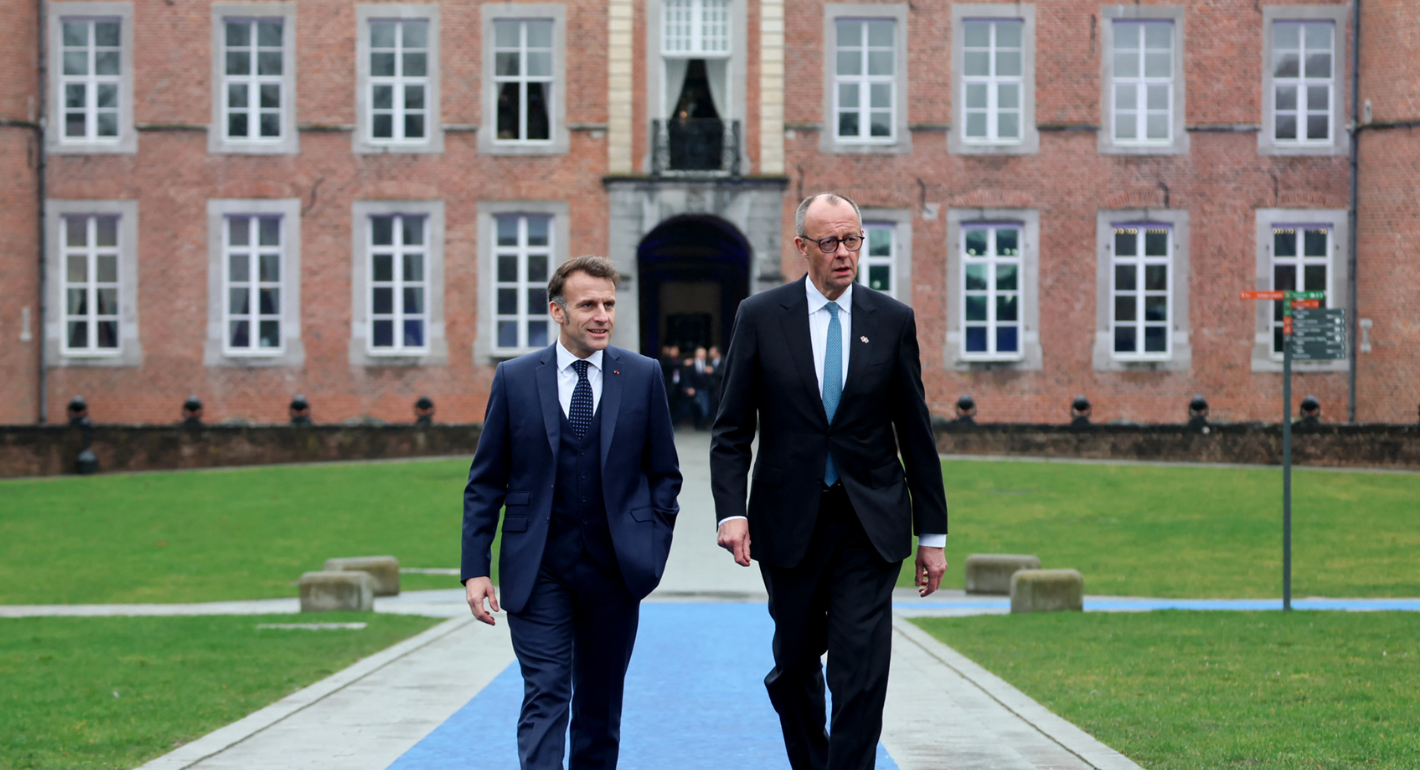
The Franco-German relationship is on the rocks again. But unlike previous moments of tension, the epochal changes on the world stage require that both step up investment in their bilateral ties.
Rym Momtaz
The EU is putting together a new security strategy to meet today’s myriad challenges. But for any proposal to be effective, the union needs to grapple with its identity and ambitions.

Pierre Vimont

The EU’s new migration policy is not suited to today’s realities. With climate change increasingly becoming a driver of displacement, Europe needs to rethink its deterrence-focused approach.

Shana Tabak
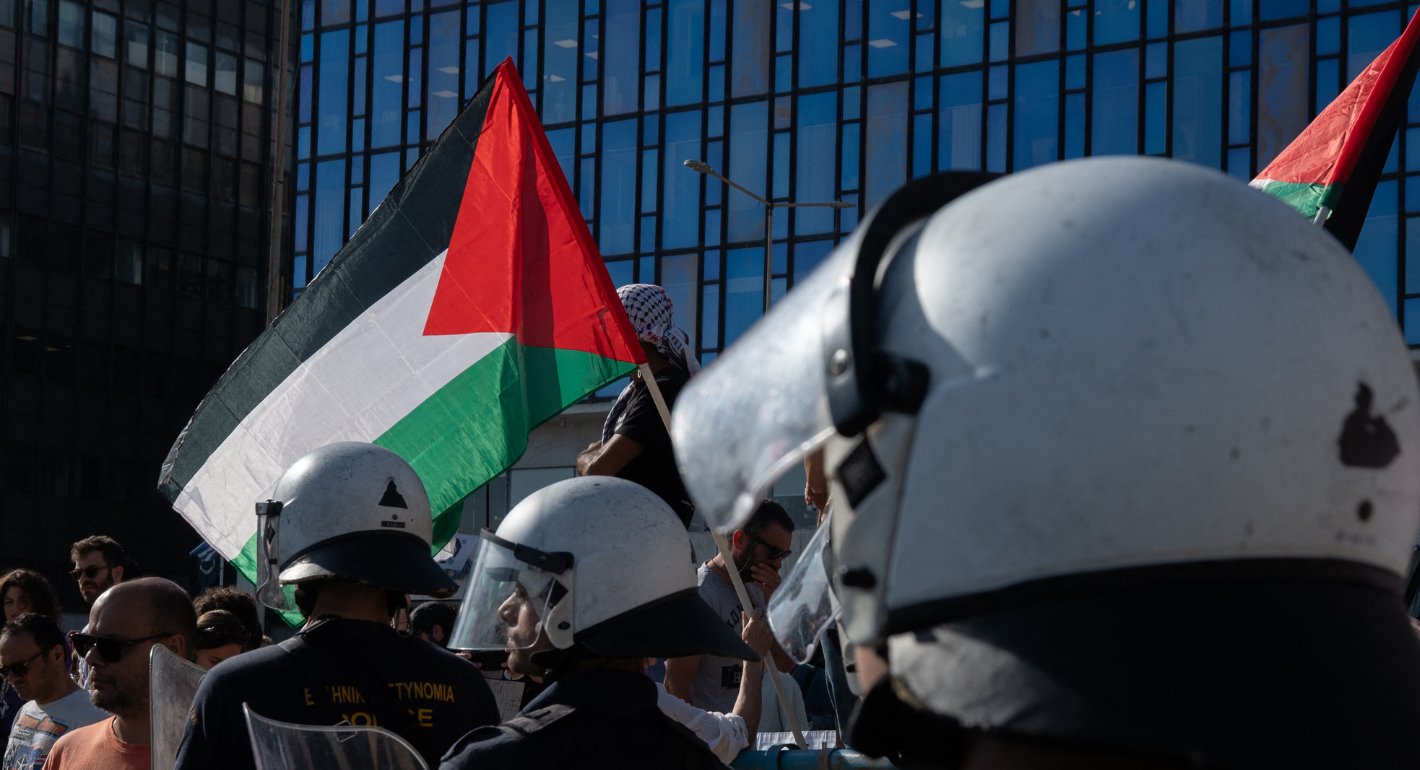
The battle over free speech has taken center stage since U.S. Vice President JD Vance accused Europe of censorship. From travel bans to social media regulation, especially around the Israel-Palestine conflict, are liberal democratic governments weaponizing free speech?
Rym Momtaz, ed.
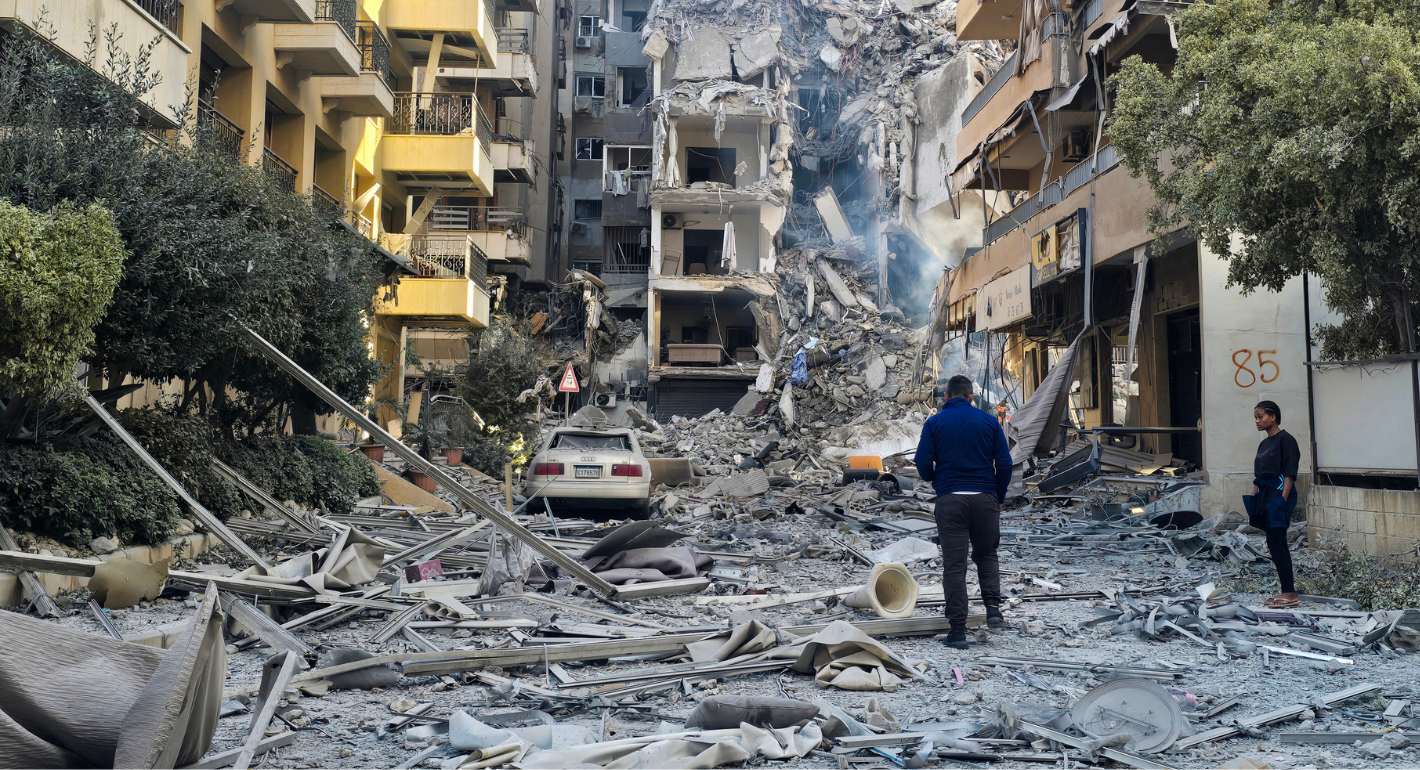
Europe seems to have accepted its sidelining in the Middle East. The EU must reassert its support for the international rules-based order and step up engagement.
Rym Momtaz