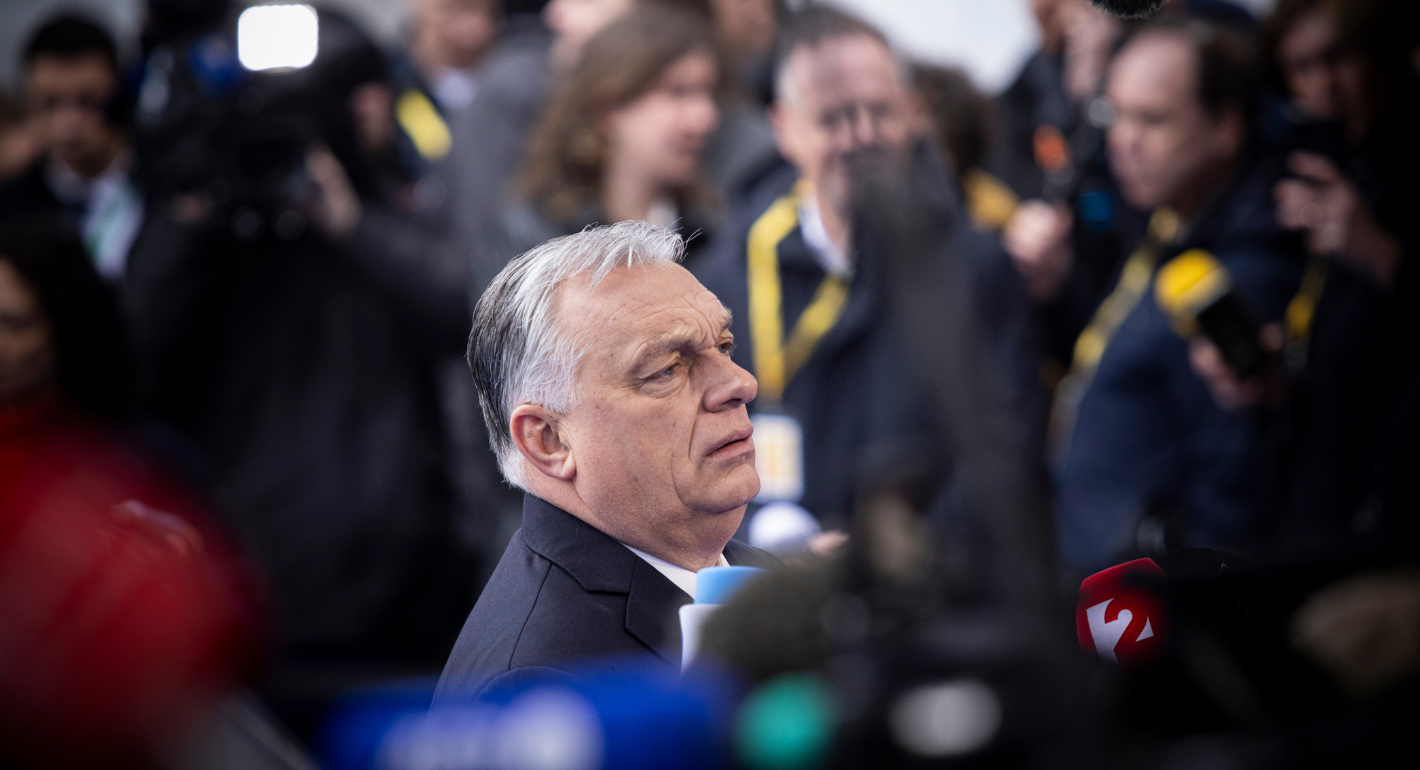
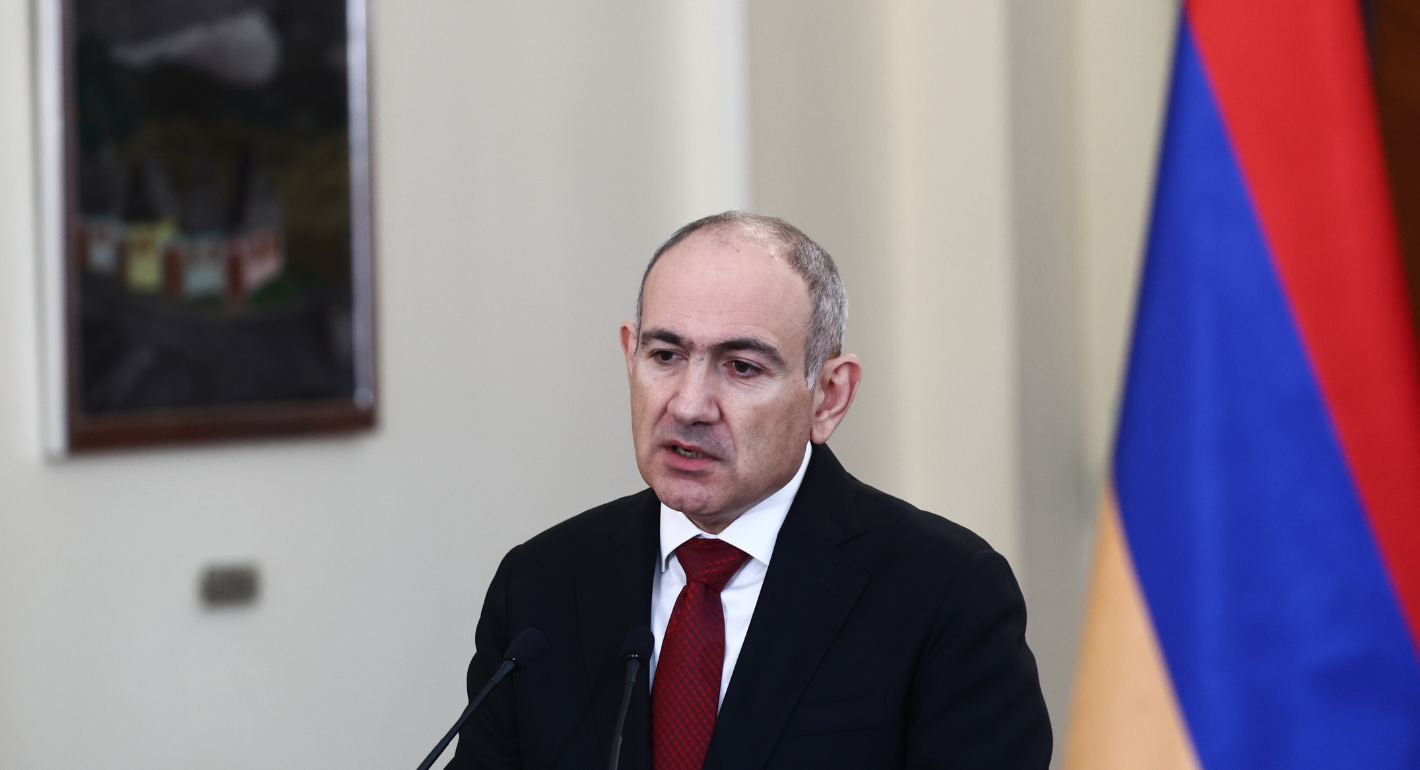
If Hungary were a normal European democracy, the conclusion would be straightforward: A government that has trailed its main challenger in the polls for months would be heading toward defeat in the April 12 parliamentary elections.
Tisza, the insurgent party led by Péter Magyar, has for some time enjoyed a meaningful lead over the ruling party of Prime Minister Viktor Orbán, Fidesz. In a democratic political system, such a gap would ordinarily suggest an imminent transfer of power.
But this is no longer an ordinary political system. Orbán’s real achievement over his sixteen years in power in Budapest has not simply been to win elections; it has been total state capture by his party. The separation of powers has been hollowed out, institutional neutrality has disappeared, and the machinery of the state is deployed to partisan ends.
That is why polling alone cannot tell the full story. A lead in public opinion matters less when the electoral battlefield is structurally tilted. State institutions, public money, regulatory authority, and government-affiliated media no longer function as neutral arbiters; they operate as instruments of Fidesz’s political survival. Despite leading the only credible challenge to Orbán in years, Péter Magyar has been denied even a token appearance on public television, while state media has worked relentlessly to amplify government messaging.
Nevertheless, something has shifted in Hungary—in a way that even Orbán’s stranglehold may no longer fully control. The most important development is not only that Tisza is ahead, but that a social and psychological barrier seems to have broken. Fidesz’s aura and the fear it has traded on have weakened. The change is visible not just in Budapest, but across the country, including in smaller towns and villages. Though a Tisza win won’t be the silver bullet many hope it will be.
The party’s rallies have undoubtedly drawn large crowds well beyond the liberal capital, suggesting that its momentum is no longer geographically confined. Even more striking, whistleblowers have begun to emerge, sharing allegations of shocking corruption and the partisan use of intelligence services.
This is why—whatever the electoral result—Hungarian politics will not return to business as usual. Even if Fidesz wins again, it may no longer be able to rule with the same confidence or authority, because it no longer appears to command the active consent of a majority. In that sense, the election is not only about a change of government; it is about the erosion of the regime’s social legitimacy.
Orbán’s system requires enemies—preferably external ones. Over time, those enemies have changed shape—from communists, to George Soros, to migration, and insecurity—but the political method has remained constant. The government, as captured by Fidesz in particular, presents itself as the nation’s sole shield against foreign threats, moral contamination, and geopolitical danger.
In the current campaign, the designated enemy is—by and large—Ukraine and specifically its accession to the EU. The message is brutally simple: Ukraine is cast not as a victim of war, but as a source of danger. Those in Brussels who support Kyiv are portrayed as hostile to Hungary, and the Fidesz government positions itself as the protector of Hungarian lives against foreign adventurism.
In this vein, Ukraine’s President Volodymyr Zelensky and European Commission President Ursula von der Leyen become convenient symbols in a morality play about peace, war, and national survival. The point is not coherence but fearmongering, reducing politics to the existential.
There has also been mounting state-backed manipulation. AI-generated propaganda, targeted social media operations, fake profiles, conspiracy narratives involving Ukraine, and even the possible importation of Russian propaganda expertise, have been mainstays of this election campaign. It also alludes to intelligence activity and police-linked interference aimed at discrediting Tisza. What is clearer than ever is that Orbán’s party now treats an election not as a fair contest, but as a domain of information warfare, institutional sabotage, and managed disorder.
As the country heads to the polls on April 12, three possible scenarios emerge.
The biggest jolt to Hungary’s distorted system would be a Tisza supermajority, which could convert a relatively modest popular advantage into decisive institutional control. That is the cleanest route to a transfer of power, because so many levers of governance remain constitutionally or administratively insulated by long-term Fidesz appointments. A Tisza victory without such a mandate might therefore produce paralysis, vetoes, and a struggle between electoral legitimacy and entrenched state power. This dynamic could also be reflected in the second possibility: a simple majority for the opposition that could prove almost unworkable. Lastly, it is possible that Tisza might win the most votes, but with Fidesz—together with the far-right Our Homeland Movement—still able to assemble a parliamentary majority.
Even in the event of a Tisza government, continuity would coexist with rupture. On rule-of-law questions, corruption, and relations with Brussels, the shift would likely be immediate and substantial. A Magyar-led Hungary would move quickly to cooperate with the European Union, join the European Public Prosecutor’s Office, and try to unlock frozen funds. But on migration, energy, and even support for Ukraine, things would require more time. Years of anti-Ukrainian messaging and the opacity of Hungary’s relationship with Russian energy mean that a change of posture would be politically and administratively difficult in a short period of time.
Tisza won’t be the rebirth of a coherent liberal or social-democratic alternative. Rather, it is the vessel into which nearly everyone opposed to Orbán is now pouring their hopes. Liberals and leftists may vote for it, not because the party reflects their ideological positions, but because it is the only plausible instrument of change.
That is the biggest warning Hungary carries for Europe: When democratic institutions decay for long enough, elections cease to be contests between programs and become desperate referendums on whether political change is possible at all.